 Thị trấn WakumaStudent login
Let Them Fail (a Little): How Natural Consequences Raise Independent Kids
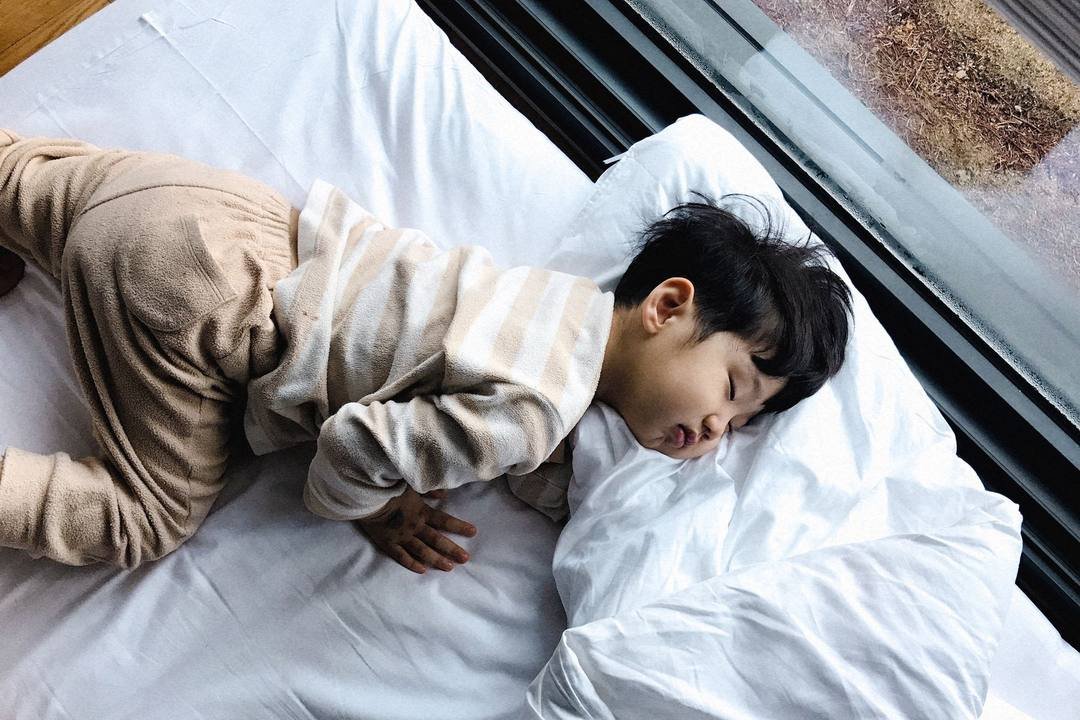
6:45 a.m. Mom calls for the fifth time: “Get up, you’ll be late!” She dresses her child, puts the school bag on their back, and spoons in a little rice porridge on the way out the door. Many families know this morning well, and all of it comes from love. There is just one small question: when your child is 30, who will wake them up?
Letting your child fail a little means letting them do their own tasks and face the small, safe results – oversleep and you arrive late – so they learn to take care of themselves, instead of parents doing everything for them.
- A natural consequence is what simply follows a child’s action; no punishment needed
- Allow failure only when the result is small, safe and over quickly
- Traffic, water, fire, medicine, strangers: parents always step in
- This is not neglect: prepare ahead, watch from nearby, then problem-solve together
- After a slip, ask “What will you do next time?” instead of “I told you so!”
- In Japan this is called “mimamoru” – watching over without taking over
Overprotective parenting: what does a child lose?
Doing it for them is faster, cleaner and involves fewer tears. But every time a parent takes over, the child loses one chance to practice. A child who is always woken up never learns to wake up alone; a child whose forgotten notebook always arrives at school never learns to pack their own bag.
Parents who “hover” over a child to catch every fall are often called “helicopter parents” – a popular label, not a diagnosis. A US study that followed 422 children for 8 years (Perry et al., 2018) found that heavy parental control at age 2 was linked with weaker control of emotions and behavior at age 5, and with more difficulties at school at age 10. That is an association, not proof that overprotection is sure to cause those problems.
Child does it, parents watch over
- Sets their own alarm
- Knows how long getting ready takes
- Tells the teacher themselves when they forget something
- Thinks: “I can do this.”
Parents do it all
- Waits to be called – the more calls, the deeper the sleep
- Waits for Mom to bring what they forgot
- Being late is “because Mom didn’t wake me”
- Thinks: “I can’t do this yet.”
We can’t wake our children up until they turn 30. But starting today, we can teach them to wake up on their own.
What is a natural consequence? The story of a late morning
A natural consequence is what happens after a child does – or doesn’t do – something, without anyone arranging it: skip the jacket and you feel cold, oversleep and you are late. Psychologist Rudolf Dreikurs popularized this idea in raising children from the 1960s; it is also a foundation of “Positive Discipline.”
Punishment is when parents add something unrelated, such as no TV for a forgotten notebook. A natural consequence lets the child’s own action do the teaching. Here is the story of Minh, age 8 (an illustrative character):
- The night beforeSetting the alarm together
Mom and Minh agree: from tomorrow Minh gets up with his alarm clock, and Mom calls only once.
“I can wake up by myself!” - Next morningAlarm off, back to sleep
Mom calls once, as agreed, and leaves it there. No second call, let alone a fifth.
“It’s time, sweetheart.” - At schoolLate for class
Mom still takes Minh to school as usual, without scolding all the way. Minh apologizes to the teacher himself; she gives a gentle reminder, and Minh feels embarrassed in front of his classmates.
“Try to be on time tomorrow, okay?” - That eveningMinh makes a plan
He sets the alarm 10 minutes earlier, puts the clock away from the bed and leaves his bag ready by the door.
“I’ll put the clock on my desk!”
Mom didn’t give a single lecture, yet Minh came up with three ideas on his own. A lesson a child figures out alone often sticks longer than a hundred reminders.
If you can, message the teacher in advance: “We are practicing waking up on his own. If he is late, please remind him just like the other children.” The teacher will see it as teamwork, not neglect.
Which failures should you allow, and which not?
Letting a child fail a little never means letting them get into danger. Before you step back, ask yourself just one question: if my child fails, will the result be small, safe and over quickly?
A small result that is over within the day, and nobody gets hurt.
- Forgets a notebook or a towel: the teacher reminds them
- Oversleeps: arrives late
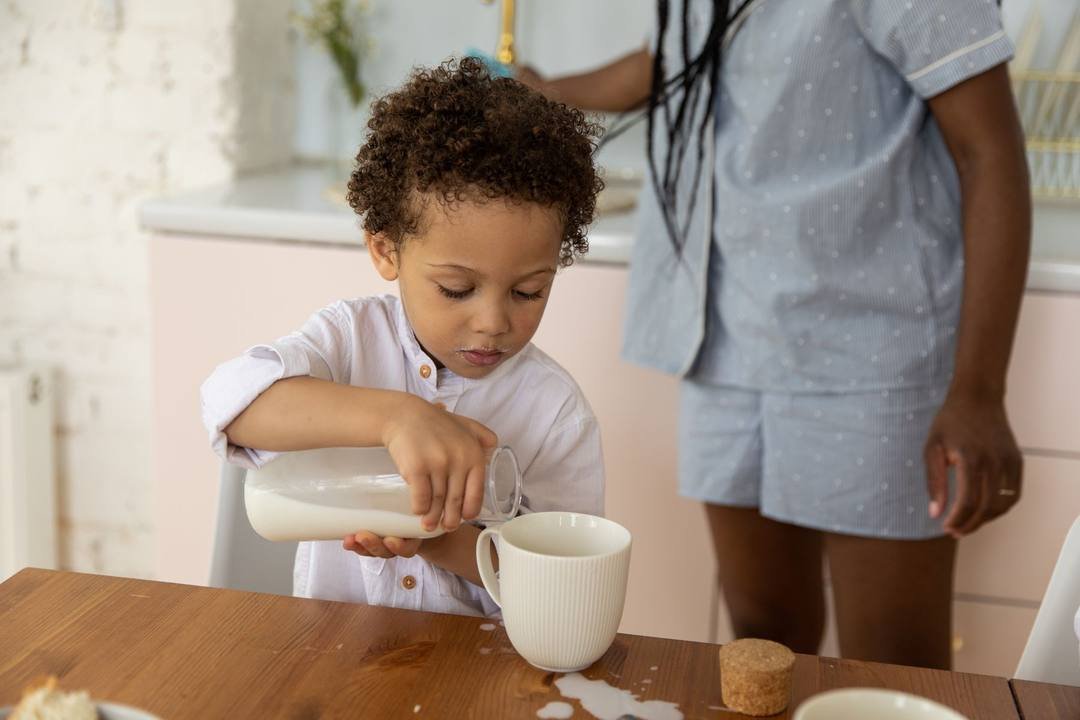
- Spills water or milk: wipes it up
- Leaves toys out: can’t find them later
A slightly bigger result, so parents prepare a backup.
- Refuses a jacket: keep one in the school bag
- An important test: remind once, then let them prepare
- Falls out with a friend: listen first, don’t rush in
- Tries simple cooking: an adult stays in the kitchen
Dangerous, affects health, or can’t be undone.
- Streets, traffic, helmets
- Deep water, fire, electricity, balconies
- Medicine, fever and illness
- Bullying, violence
- Strangers online
In Hanoi, many children travel to school by motorbike or car with an adult. So this article does not suggest letting children walk the streets alone: traffic is always a red light.
8 examples of natural consequences in a child’s day
Most green-light failures happen right at home. Here is the usual response, and something different to try.
| What parents often do | Try this instead | What the child learns | |
|---|---|---|---|
| Won’t get up | Call five times, dress them | Set the alarm together the night before; call once in the morning | Managing their own time |
| Forgot homework notebook | Rush it to school | Don’t bring it; tonight, pack the bag together using the timetable | Getting ready on their own |
| Spilled water or milk | Grab it and wipe it up quickly | Hand over a cloth: “You wipe it, I’ll wait.” | Fixing what they did |
| Toys left everywhere | Tidy up while the child sleeps | Don’t tidy for them; next time they can’t find things | Putting things in their place |
| Spent all the pocket money on day one | Give more | Don’t; next week, divide it by day together | Waiting and saving |
| Refuses to wear a jacket | Force it on – an argument starts | Put it in the bag; if cold, they take it out | Listening to their own body |
| Rushed homework, many mistakes | Sit and correct every error | Say “Check it once, okay?”, then let the teacher mark it | Checking their own work |
| Broke a toy by throwing it | Buy a new one right away | Not yet; try to fix it together | Taking care of their things |
What all 8 have in common: parents don’t take over, don’t scold, and don’t “rescue” right away. If your child doesn’t yet study on their own, see how to help kids do homework on their own.
What should parents say after a child fails?
Right after a slip, “I told you so!” comes out easily. It makes the child defend themselves instead of thinking about what they did. Try these 4 steps:
- Empathize first
“What a rushed morning. How did that feel?” Children need to feel understood before they are ready to think ahead.
- No lecture, no extra blame
The consequence has already taught the lesson. More blame only makes the child angry at you – and forget about their own part.
- Ask, so they find their own fix
“What would you do differently next time?” Let them say their own idea, even if it isn’t perfect.
- Trust them and let them try again
“I know you can do it tomorrow.” When they succeed, describe exactly what they did: “You got up on time by yourself today.”
In our classes, teachers don’t move the beads for a child or give the answer right away. When a child makes a mistake, the teacher asks a question and waits for the child to recalculate and find the error. Making a mistake and fixing it yourself is the feeling we want children to take home. See what a 60-minute lesson looks like.
How do Japanese parents “watch over” their children?
In Japan, letting children do things for themselves from an early age is completely normal. Three ideas show the spirit behind it:
The word “mimamoru” (見守る) joins “to see” and “to protect”: adults stay close and watch carefully, but let the child do it.
The proverb “kawaii ko ni wa tabi o saseyo”: truly loving a child means letting them go through hardship themselves, not keeping them in your arms forever.
The TV program “Hajimete no otsukai” (since 1991; “Old Enough!” on Netflix) films young children running their first errand alone, while adults watch from a distance.
Japanese primary school children pack their own bags for the next day and often walk to school with friends. See also a day in the life of a Japanese primary school student and how Japanese parents raise independent children. Japan is different from Hanoi, though: what is worth learning is the spirit of “watching over,” not sending children out on the streets alone.
What can children do on their own at each age?
There is no single age that fits every child. What matters is stepping back one stage at a time, not jumping straight from “doing everything” to “hands off”:
- Parent does, child watches
Talk through each step as you go.
- Parent does, child helps
The child does a small part.
- Child does, parent helps
Help only with the hard part.
- Child does, parent watches
Stay close, say nothing.
- Child does it alone
Just ask how it went.
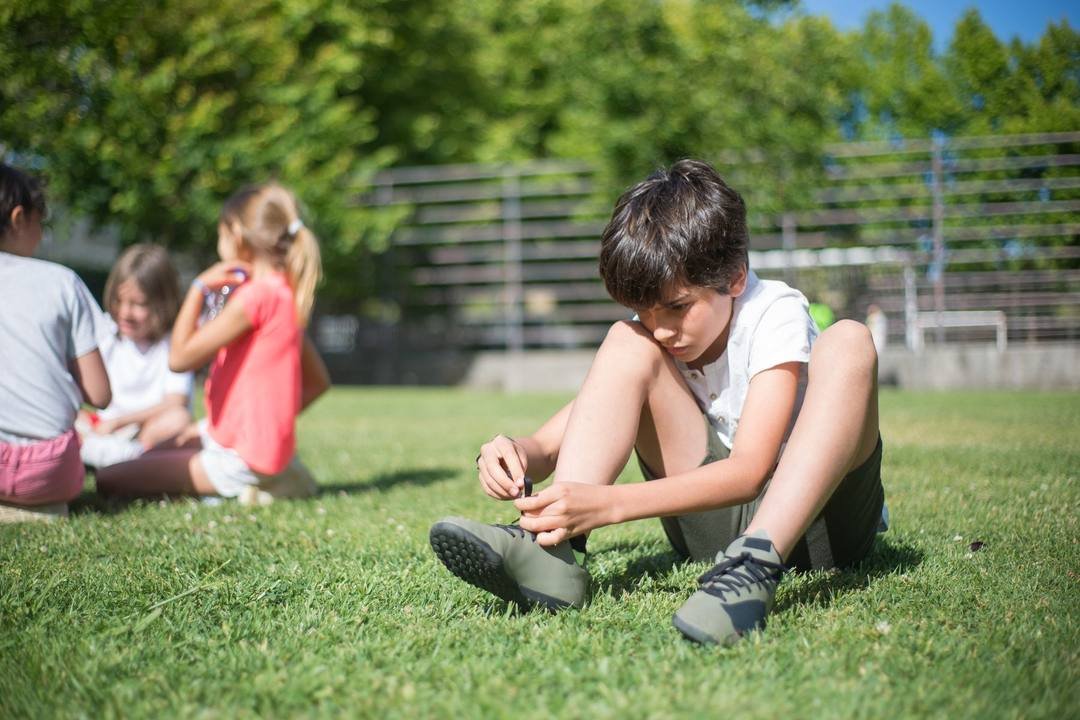
- Ages 3–5Taking care of themselves
Dress themselves, put their shoes away, pour their own water (a little spill is fine), tidy up toys.
- Ages 6–8School things
Pack the bag using the timetable, wake up with an alarm, tell the teacher themselves when they forget something.
- Ages 9–12Time and money
Plan their study week, look after their pocket money, cook simple dishes while an adult is at home.
These are suggestions from our experience, not milestones a child must reach. For ages 3–6, see also Japanese-style parenting from 3 to 6.
Grandparents love their grandchildren and often want to help. Tell them the family’s goal in advance (“This month he is practicing packing his own bag”), ask them to praise the child for doing it alone, and practice only one thing at a time so the whole family can stick with it.
Frequently asked questions
Isn’t letting a child fail the same as neglecting them?
No. Neglect means not paying attention; letting a child fail a little means parents choose safe situations in advance, watch from nearby and talk it through afterwards. With dangerous things such as traffic, water, fire or medicine, parents always step in immediately.
At what age can children face natural consequences?
From about 3–4, with very small things, such as wiping up the water they spilled. As they grow, the tasks grow too: at 6–8, packing their bag and waking up with an alarm; at 9–12, managing their time and pocket money. These are suggestions; every child is different.
What should I do if my child cries or gets angry after failing?
Let them cry and name the feeling: “You’re sad because the teacher reminded you, right?” Don’t rush to fix it for them or give a lecture. Once they calm down, ask what they want to do next time.
How is a natural consequence different from punishment?
A natural consequence simply follows the child’s action – no jacket, so they feel cold. Punishment is something unrelated that parents add, such as no TV for a forgotten notebook. Natural consequences help children think about what they did; punishment tends to teach them only to avoid getting caught.
What if the teacher thinks we don’t care?
Tell the teacher in advance that you are practicing waking up and packing the bag independently, and ask them to remind your child just like the others. When told in advance, the teacher will see it as teamwork between home and school.
Try a free soroban lesson
Classes of 3–5 children at Vinhomes Gardenia (Hanoi), 60 minutes each, taught exactly as in Japan. Phone · Zalo 096.802.8484.

Written by the teaching team of Kodomo Soroban Center, following the method and textbooks of Kodomo School (Japan, teaching soroban since 1976). The center is licensed by the Hanoi Department of Education and Training, and our project is a 2026 EDU-Port Nippon supported project of Japan’s Ministry of Education (MEXT).
About usEDU-Port NipponEducation licenseRelated articles

How to teach your child to study on their own: 6 small habits from Japanese families
Help your child study without reminders: 6 Japanese-style habits – a set time and spot, a to-do list, a timer, packing the…
My child learns slowly – what should I do? 7 ways to help them keep up without pressure
Is your child slow to learn and understand? 5 common reasons, 7 ways to help at home, 4 things to avoid, and…

Converting units in grade 3: a length, weight and capacity chart and how to avoid mistakes – with a free worksheet
Grade 3 unit conversion: a chart for mm, cm, dm, m, km, g, kg, ml and l; multiply going to a smaller…