Japanese-style parenting for ages 3–6: 10 small habits many Japanese families keep every day
When children reach preschool age, many parents start reading about “Japanese-style parenting”. But ask a Japanese mother “Which method do you use?” and she may look a little puzzled. We are Japanese and teach soroban to children in Hanoi. As we see it, Japanese-style parenting for ages 3–6 mostly happens in very small things at home, repeated every day.
For children aged 3–6, Japanese-style parenting is usually not about early reading and writing, but about a steady daily rhythm and small things children do for themselves.
- Parents greet first: in the morning, when leaving, when coming home, before bed
- Meals come with words of thanks
- Each child has a small “role” at home
- Children do their own things – parents stay close and wait
- Praise effort; scold briefly, never hit
- Early bedtime, outdoor play, a book before sleep
- Choose the habits that fit your family
What is Japanese-style parenting? Not a method, but a family routine
In Japanese, teaching children daily habits and manners is called shitsuke (躾). This kanji was created in Japan by combining 身 (body, oneself) and 美 (beautiful), and is often explained as helping a child carry themselves well. Shitsuke has no textbook: it lives in how a family greets each other, eats and puts things away.
One thing to say clearly: every Japanese family is different. Some are strict, some relaxed; some live with grandparents, some have two working parents. The ten habits below are common in many families, not rules that everyone follows.
This article is about a day at home for children aged 3–6. For life at Japanese schools, see our articles on independence, cleaning the school and a day at elementary school.
Mornings and meals: 3 habits that start with a greeting
1. Parents greet first, children follow
In many Japanese homes, greetings come in pairs. A 3-year-old doesn’t need to understand them all; children learn by hearing them every day.
“Good morning” – even to family.
“I’m off” – “See you when you’re back”.
“I’m home” – “Welcome home”.
“Good night” – before the lights go off.
You don’t need to speak Japanese – the language you use at home works just as well. What matters is that adults greet first, and greet their own child too, instead of only saying “Say hello to Grandma!”.
2. Meals with “Itadakimasu” and “Gochisōsama”
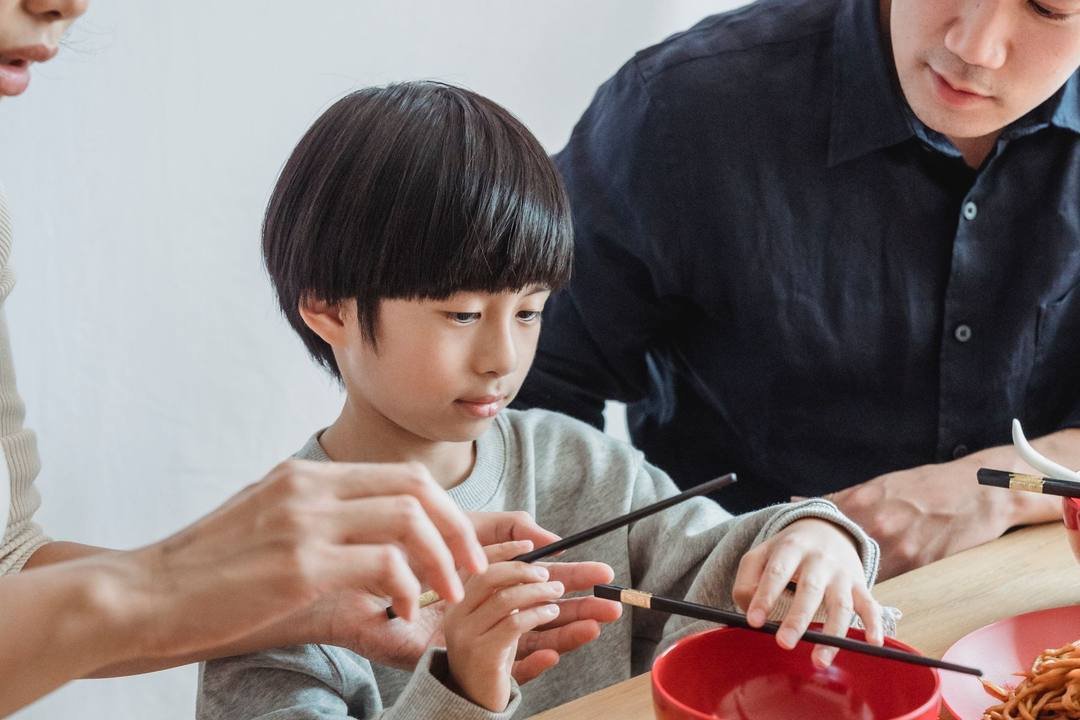
Before eating, the family puts their hands together and says “Itadakimasu” – words of thanks before a meal. After eating, they say “Gochisōsama” – thank you for the meal. Many parents tell young children it is a thank-you to the cook and to the people who grew the vegetables and raised the fish.
When a child leaves food, many parents gently say “mottainai” (what a waste), without forcing them to eat.
3. A small “role” in the kitchen and at the table
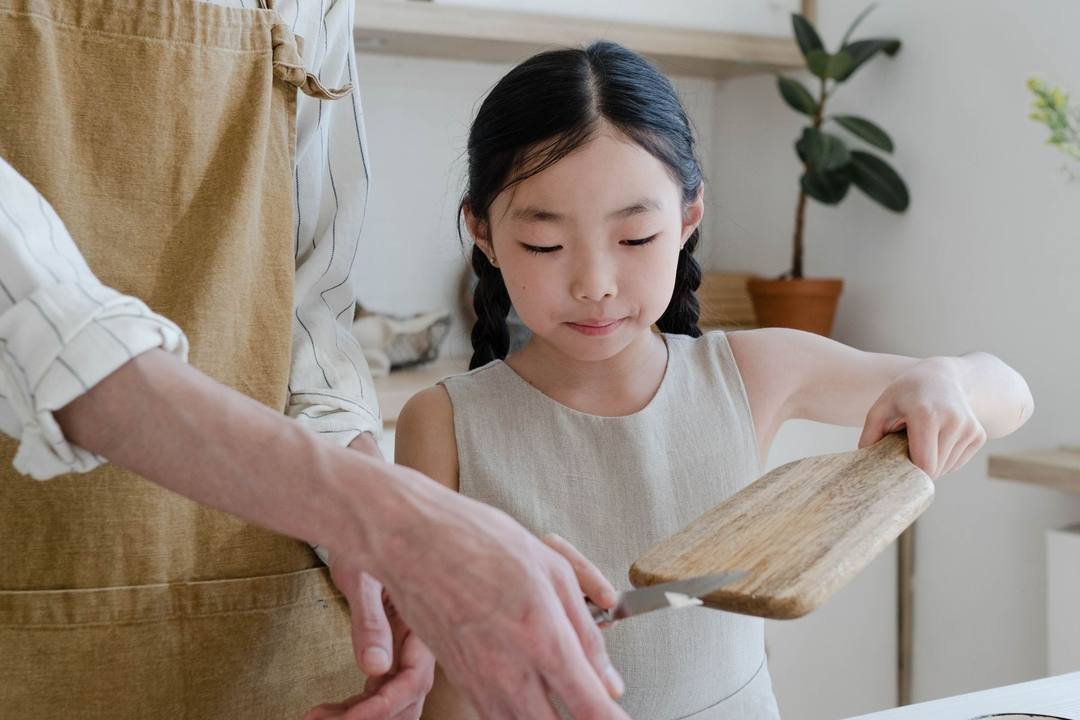
In Japanese, a child helping with housework is called o-tetsudai. For ages 3–6, that means setting out chopsticks, carrying their bowl to the sink, washing vegetables, wiping the table. What’s worth copying is that the job is given as a role – “setting out the chopsticks is your job” – not just asked for whenever someone remembers.
When your child finishes, many Japanese parents say “Arigatō, tasukatta” (thank you, that really helped) instead of giving a reward. For chores by age, see How do Japanese parents raise independent children?.
Doing their own things: 3 habits of “waiting a moment”
4. Dressing, undressing and lining up shoes
From around age 3, many Japanese children take off their own shoes, line them up facing the door, hang up their jacket and put their bag in its place. Slow and not-quite-neat is normal. Parents can help by making things easier: low hooks, shoes with hook-and-loop straps, a basket just for your child’s things.
5. Getting ready for tomorrow the night before
In many Japanese families, preschoolers prepare tomorrow’s clothes and bag with their parents in the evening. Mornings are calmer. A 3- or 4-year-old only needs to pick out clothes; a 5- or 6-year-old can check their bag against a picture chart – a good step toward getting ready for grade 1.
6. Mimamoru: stay close and wait
Japanese people often use the word mimamoru (見守る): watching over and protecting, without doing it for the child. When your child is struggling with a button, try this:
- Wait before helping
Count to 10 silently. Often your child manages in that time.
- Ask instead of doing
“Which part do you want help with?” – let your child say where they’re stuck.
- Help with part of it, leave the last step to your child
Push the button halfway through and let your child finish. The feeling of “I did it!” belongs to them.
- Next time, step back a little more
The following week, just stand nearby. Bit by bit, the job becomes theirs.
The hardest part is the parents’, especially on rushed mornings. So practice “waiting” when you’re not in a hurry – in the evening or on weekends.
Praise and scolding: 2 habits about words
7. Praise effort, and be specific
Many Japanese parents say “Ganbatta ne” – “you really tried” – even when the result isn’t great. Instead of “You’re so clever”, say exactly what your child did: “You did up every button yourself – you really stuck with it.” For more on praise, see My child is “lazy” about studying – what should I do?
8. Scold briefly, say what to do – and never hit
Japanese parents do scold, but many try to keep it short and talk about what the child did, not who the child is. Once it’s said, it’s over.
Try saying
- “Let’s walk inside the house.”
- “Throwing toys hurts your friend. Hand it to them, okay?”
- “Mom feels sad that you hit your little brother.”
Avoid
- “No running!” – only saying what’s forbidden
- “Why are you so naughty?” – criticizing the child
- Long scolding in front of others
Since April 2020, Japanese law has made it clear that parents must not use physical punishment to discipline their children. Japanese-style parenting today means teaching with words and by example – not by hitting.
Afternoons and evenings: plenty of play, early bedtime and a book
9. Early to bed, early to rise, outdoor play
Japan has a nationwide campaign called “Hayane, hayaoki, asagohan” – early to bed, early to rise, eat breakfast – promoted since 2006 by Japan’s Ministry of Education together with many organizations. During the day, many children get outdoor play (soto asobi) – in Hanoi, an apartment courtyard or a nearby park is enough.
10. A picture book before bed
Many Japanese families have a habit of yomikikase – reading picture books (ehon) aloud before bed. One book, a few pages, the same favorite over and over – all fine. Then lights off and “Oyasuminasai”.
Children learn habits more from what parents do every day than from what parents say.
No need to copy it all: choose the habits that fit your family
A home in Hanoi is not a home in Japan: some families live with grandparents, and many children nap at school. Before you start, ask yourself:
- Does it fit our daily rhythm? If you get home late, start by turning off screens a little earlier.
- Can the whole family do it? If Grandma still lines up the shoes for her grandchild, talk with her first.
- Is it right for my child’s age? A 3-year-old doesn’t need to pack a bag yet; a 6-year-old can.
- Can we keep it up every day? One steady habit beats ten abandoned ones.
- Is my child enjoying it? If a habit has turned into scolding time, make it lighter.
Not sure where to begin? Start with greetings: greet your child first every morning, when leaving and when coming home, for a month. Once it sticks, add a second habit.
Starting with a greeting, ending with tidying up: in our soroban class
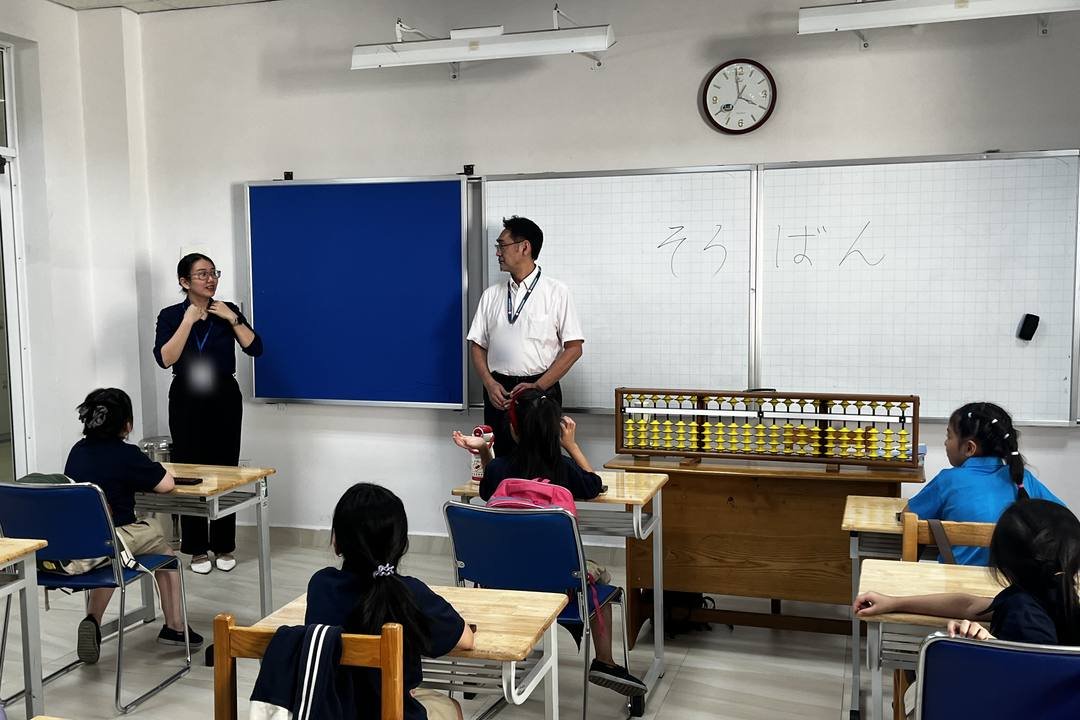
Our 60-minute soroban lesson begins with the whole class standing, bowing and saying “Onegaishimasu” (please teach us). At the end, the children spend 3 minutes resetting their abacus to 0 and putting things back in place, then say “Arigatō gozaimashita” (thank you).
Teachers “wait” too, just like parents at home: when a child moves the beads wrong, the teacher asks a question so the child can find the answer. Each class has only 3–5 children. Our center in Vinhomes Gardenia has a kindergarten class for children from age 5 and classes for elementary students.
See how a lesson works, classes at our center and soroban clubs at schools. The trial lesson is free – sign up on our contact page or call or message us on Zalo at 096.802.8484.
Frequently asked questions
What is Japanese-style parenting?
It’s a general name for parenting habits common in many Japanese families: greetings, saying thanks before and after meals, small chores, letting children do their own things, praising effort, early to bed and early to rise. It isn’t a method with a curriculum, and every family does it differently.
How do Japanese parents raise a 3-year-old?
Many Japanese families focus more on daily habits than on learning letters: greetings, saying “Itadakimasu” before meals, taking off their own shoes, putting toys away together with a parent. Adults show how, then stay close and wait for the child to do it.
Do Japanese parents hit or scold their children?
Japanese parents do scold when needed, but many try to keep it short, talk about what the child did and avoid long scolding in front of others. As for hitting: since April 2020, Japanese law states that parents must not use physical punishment to discipline their children.
Can Japanese-style parenting work in Vietnam?
Yes, if parents choose the habits that fit their family instead of copying everything. Greetings, small chores at home and a book before bed all work in Hanoi. What matters is that the whole family, grandparents included, does it the same way.
Which habit should we start with?
Greetings are the easiest: greet your child first every morning, when leaving and when coming home. Keep one habit for about a month, then add a second, such as a small role at mealtimes.
Try a free soroban lesson
Classes of 3–5 children at Vinhomes Gardenia (Hanoi), 60 minutes each, taught exactly as in Japan. Phone · Zalo 096.802.8484.

Written by the teaching team of Kodomo Soroban Center, following the method and textbooks of Kodomo School (Japan, teaching soroban since 1976). The center is licensed by the Hanoi Department of Education and Training, and our project is a 2026 EDU-Port Nippon supported project of Japan’s Ministry of Education (MEXT).
About usEDU-Port NipponEducation licenseRelated articles

What is Flash Anzan? How to practice Flash Anzan mental math at home with your child
Flash Anzan is a mental math drill: numbers flash on a screen one by one and your child adds them on an…
How to teach kids to tell time: 5 easy steps from o’clock to every minute – with a free printable worksheet
How to teach your child to read an analog clock in 5 steps: hour and minute hands, o’clock, half past, 15 and…

How to learn division facts fast and easily: dividing by 2 to 9 – plus a free worksheet
Division facts are just the times tables read backward. 6 ways to learn dividing by 2 to 9, tips for 7, 8…