











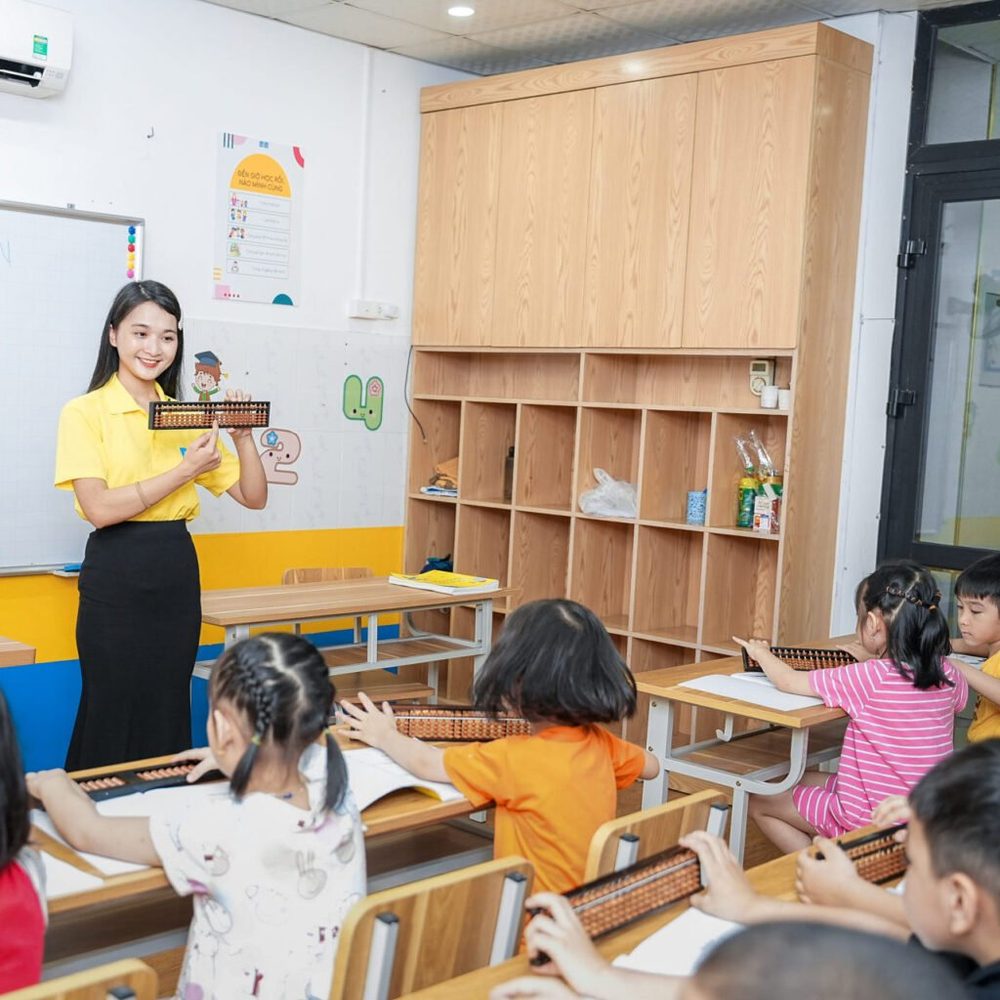
Kodomo Soroban Center · Vinhomes Gardenia
- Shophouse B16-11, Vinhomes Gardenia Hàm Nghi, Hà Nội
- Soroban classes for kindergarten and primary school children
- Choose 1, 2 or 3 sessions a week
About soroban
What is a soroban?How it works, a short historyJapanese sorobanWhy learn the Japanese wayBenefits of sorobanWhat children gainArticles for parentsAges, how to learn, history…Start
Where to start?A 4-step path for beginners (in Vietnamese)あJapanese alphabetHiragana & Katakana · sound · PDF (in Vietnamese)あKatakana chart46 letters · loanwords · PDF (in Vietnamese)Your name in JapaneseVietnamese names in Katakana (in Vietnamese)Hello in Japanese24 greetings with sound (in Vietnamese)Thank you in JapaneseThanks, replies, sorry · 18 phrases (in Vietnamese)Map of Japan NEW47 prefectures · places to play and learn (in Vietnamese)Kanji & level
漢Kanji N5102 kanji · Sino-Vietnamese · PDF (in Vietnamese)漢Kanji N4146 kanji · stroke order · PDF (in Vietnamese)漢On and Kun readingsOn readings from Sino-Vietnamese · lookup (in Vietnamese)Japanese level test10 minutes · Hiragana → N4Japanese reading practice20 N5 texts · furigana · audio (in Vietnamese)What is the JLPT?Levels · pass marks · test on Dec 6 (in Vietnamese)JLPT mock test N5 – N220 questions · 10 min · instant score (in Vietnamese)Math
Multiplication tables2–9 · games · PDF (in Vietnamese)100-cell test NEW100 additions · timed · Top % (in Vietnamese)Math worksheets, grades 1–3By topic, with answers (in Vietnamese)Soroban & mental math worksheetsPrintable PDF (in Vietnamese)Mental math trainerFlash anzanOnline sorobanMove the beads on screenLetters & coloring
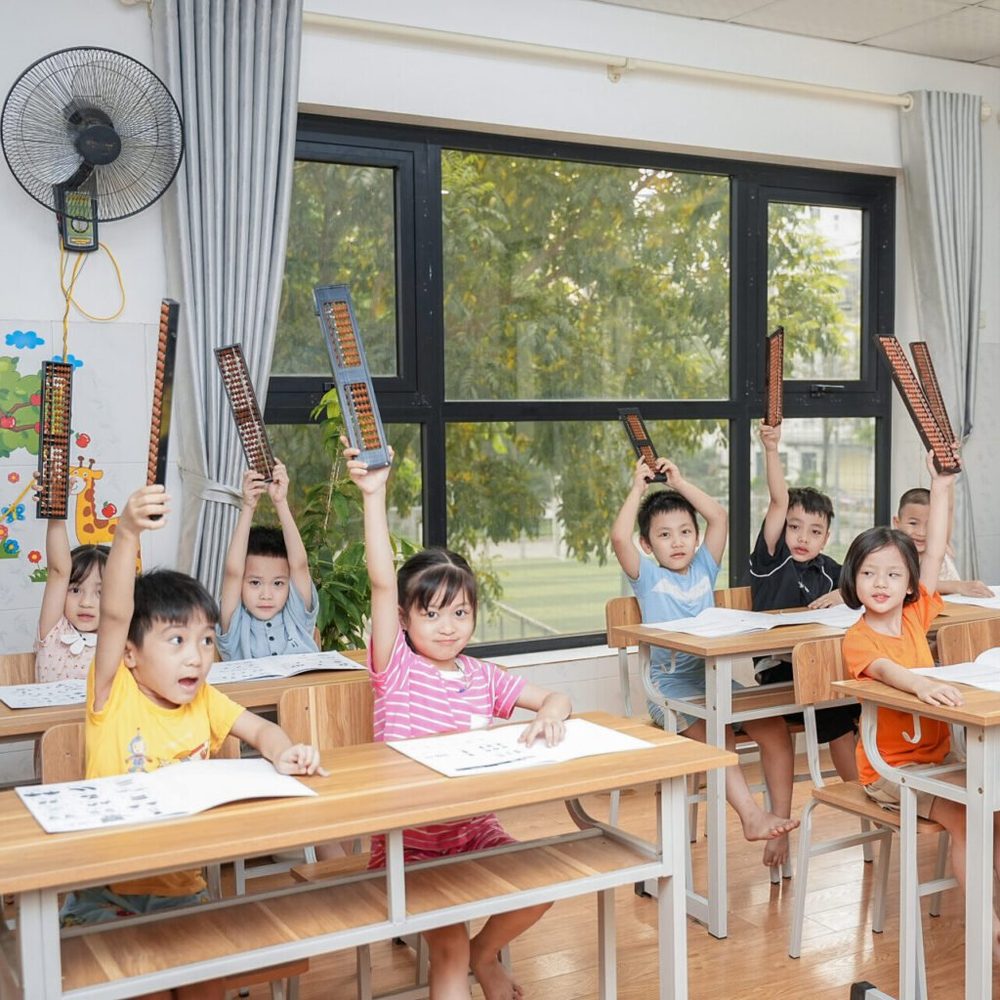
AaVietnamese alphabet29 letters, sounds, tones (in Vietnamese)Letter tracing29 PDF sheets (in Vietnamese)Coloring pagesTết, Wakuma, color by math (in Vietnamese)Kodomo Soroban Center teaches the soroban program of Kodomo School, which has taught soroban in Aichi Prefecture, Japan, for nearly 50 years. Your child can learn at our center in Vinhomes Gardenia or in the club at their own school.

Classes for 5-year-olds and primary school children at Vinhomes Gardenia, 1, 2 or 3 sessions a week. Free trial lesson.
See our classes Parents of club membersWhat your child learns, and how the club reports to and keeps in touch with parents – all in one place.
See club information SchoolsIt begins with a free 30-minute trial session for grade 1 and grade 2 students.
See how it works
Nearly 50 yearsof teaching soroban in Aichi, Japan
EDU-Port Nippon2026–2027 project supported by Japan’s MEXT** Selected as the “Project for Japanese-Style Soroban Education and Instructor Development in Vietnam.”


KSC online members study two subjects with one account. Try it free for 3 days.

Build a whole town with Wakuma: 12 buildings and 198 stages – children practice from kyu 14 to kyu 3.
Log in
Hiragana, Katakana, JLPT N5, N4, N3 and N2 Japanese (20 lessons each) with mock tests, taught in Vietnamese. For students from grade 4 and adults.
Learn moreNo account yet? Try it free for 3 days · see prices
Japan trips with your child NEWJapan map for families47 prefectures and places where children play and learn: zoos, aquariums, science museums, soroban and calligraphy – each with a Japanese phrase and its audio. (Page in Vietnamese)See the mapIsn’t all soroban the same – just “math for developing thinking skills”?
In fact, the way soroban is learned varies a great deal depending on the country it comes from.
Today there is a Malaysian way of learning soroban, a Japanese way, and others. Soroban is also easily confused with Finger Math. In Japan, soroban is a tool for building patience and perseverance along with sharp, quick thinking.
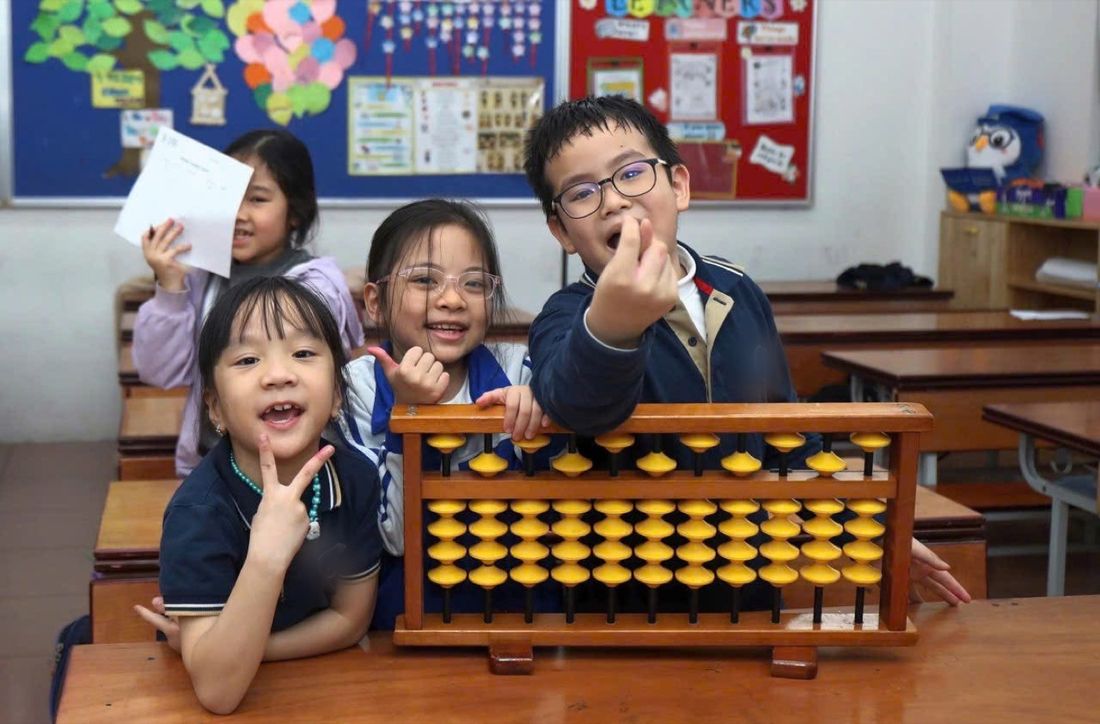
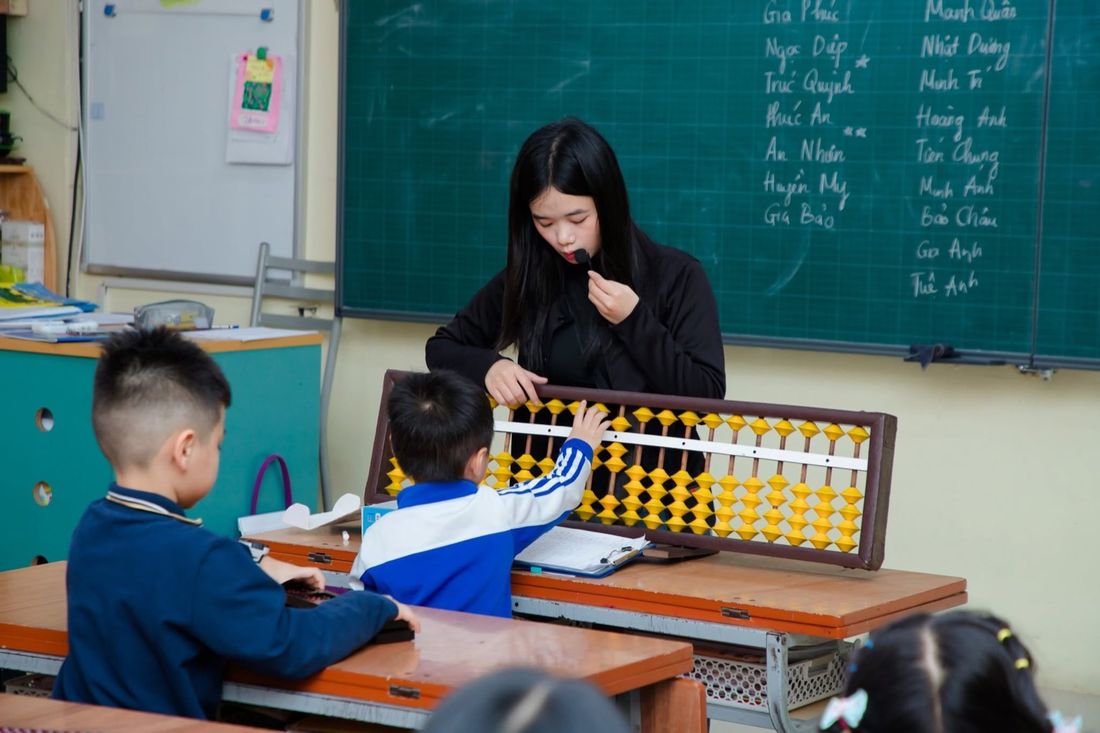
With a traditional abacus and a few simple finger movements, children practice calculating by turning numbers into beads.
Read the number on paper or on a screen.
2 in the tens place, 7 in the ones place. Move the beads with your fingers to show the number.
Close your eyes and move the beads on a soroban you picture in your mind (mental calculation).
Tap a bead and the number appears above. Try setting 7, then 25, then the year your child was born.
The Kodomo Soroban program is the same program used in Japan today, run by the Kodomo School education network, whose history goes back to 1976.
Our goal is not to grow as fast as possible. For 50 years in Japan, we have refined our approach to teaching and kept improving it through real experience with thousands of children, so that we can offer them the most effective soroban program we can.


Focus, persistence and clear thinking: what parents hope for, built lesson by lesson.
Children see numbers as bead pictures and understand how they work.
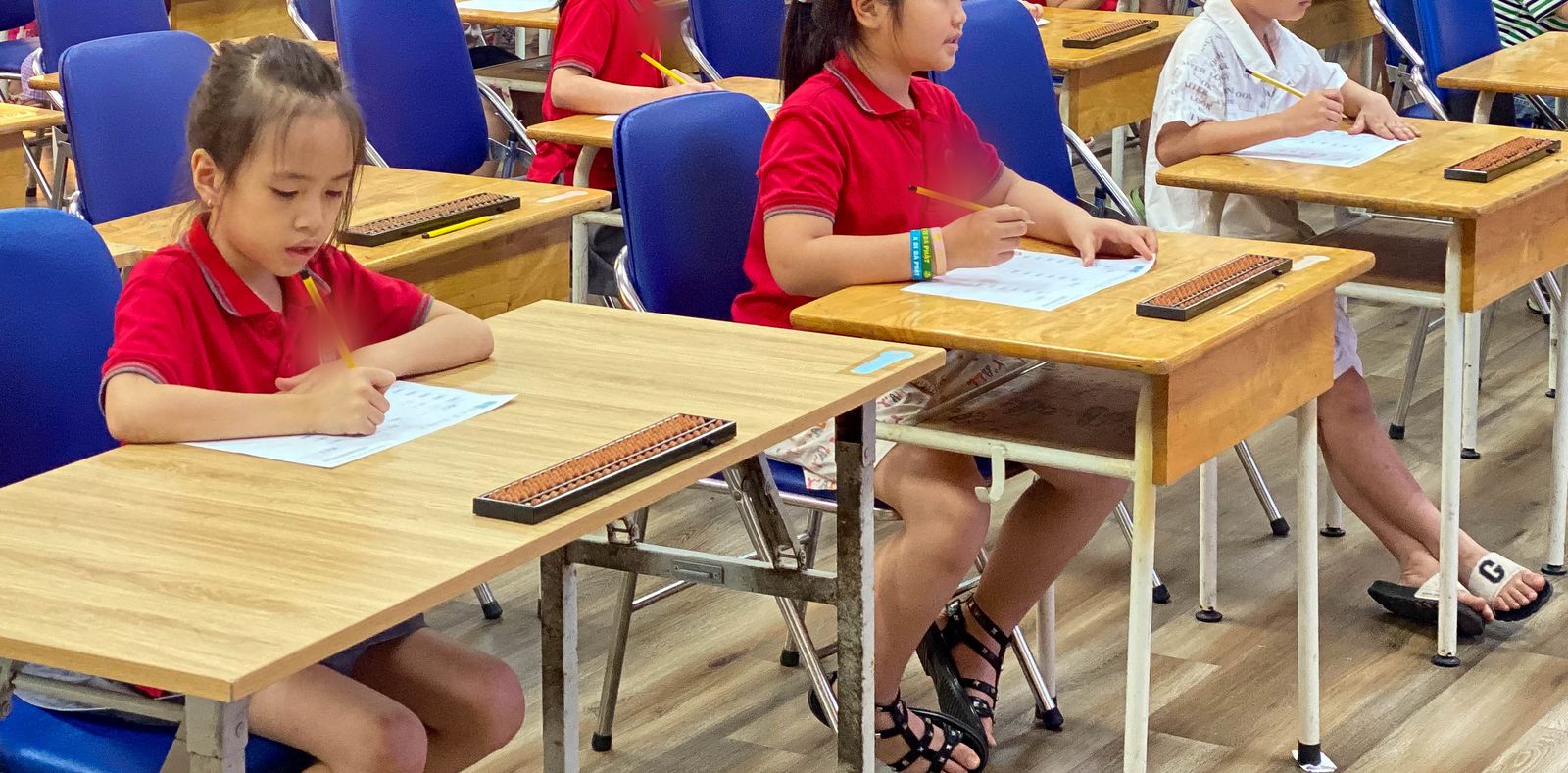
Timed practice, a little faster every lesson.
Eyes, hands and brain work together.
Careful bead moves and complete, correct answers.
Visible progress turns into confidence.
Grid drills and mental math use both sides of the brain.
Every new student starts at Level 0, whatever their age, and moves up one step at a time, building solid finger technique, posture and a clear picture of the beads.

Posture, moving the beads, simple sums
Adding with carrying, 2–3 digit numbers
Every addition and subtraction on the soroban
Times tables, multiplying, dividing, exams
Session counts follow the in-school club pace (once a week). At our center, children can come 1, 2 or 3 times a week.
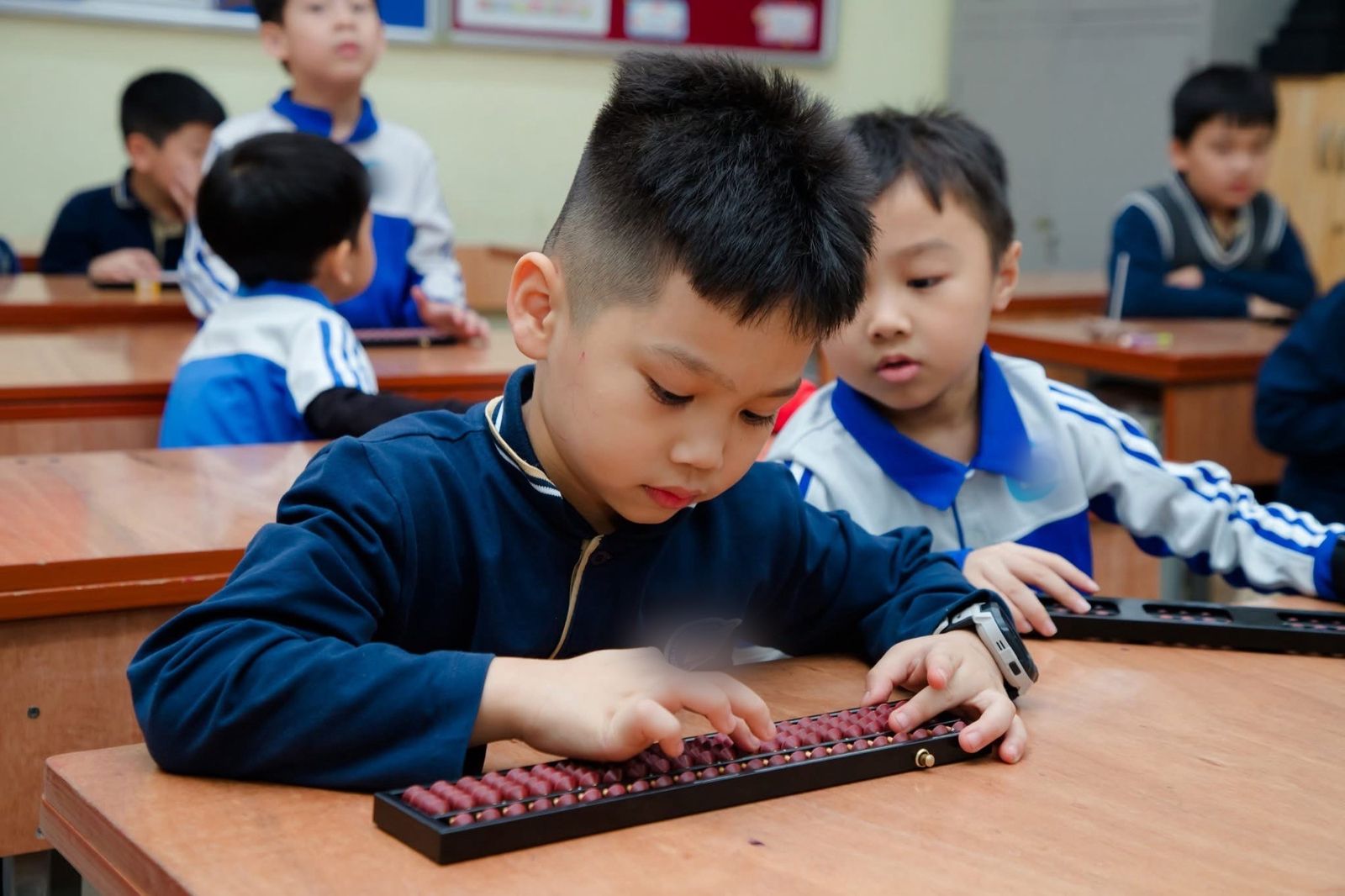
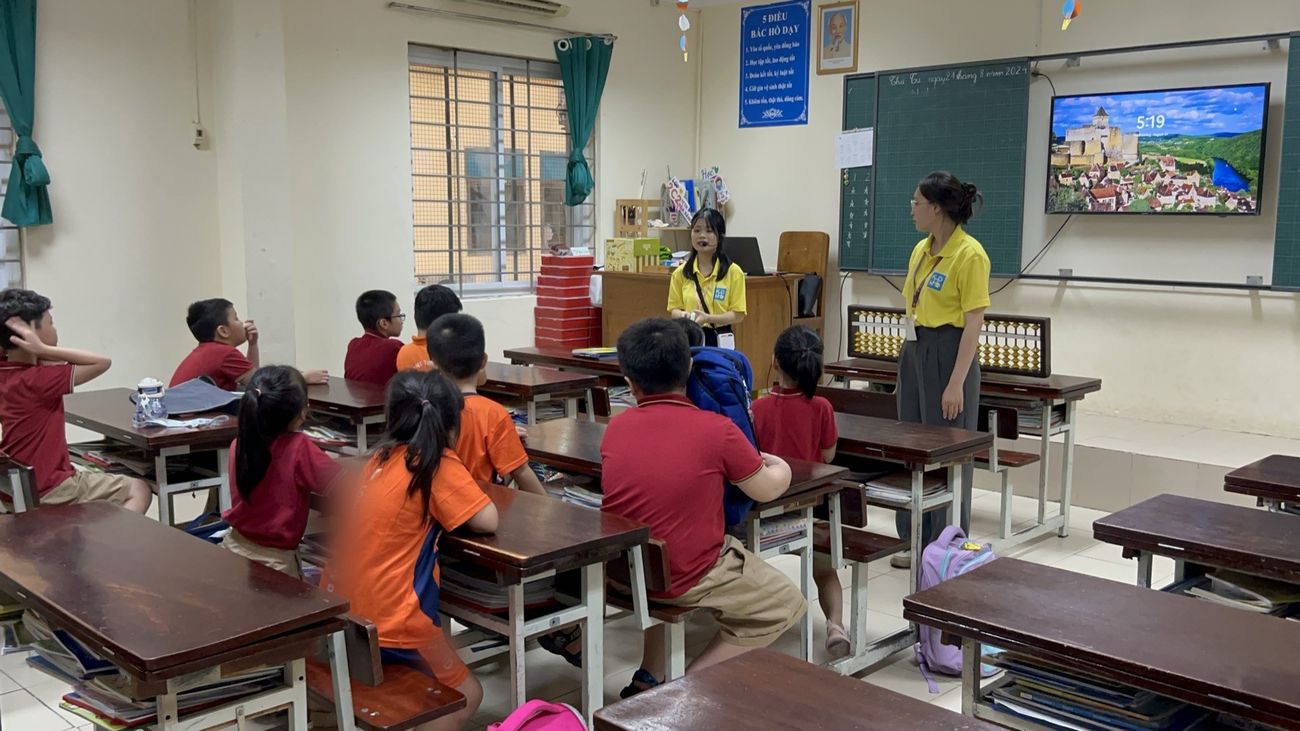
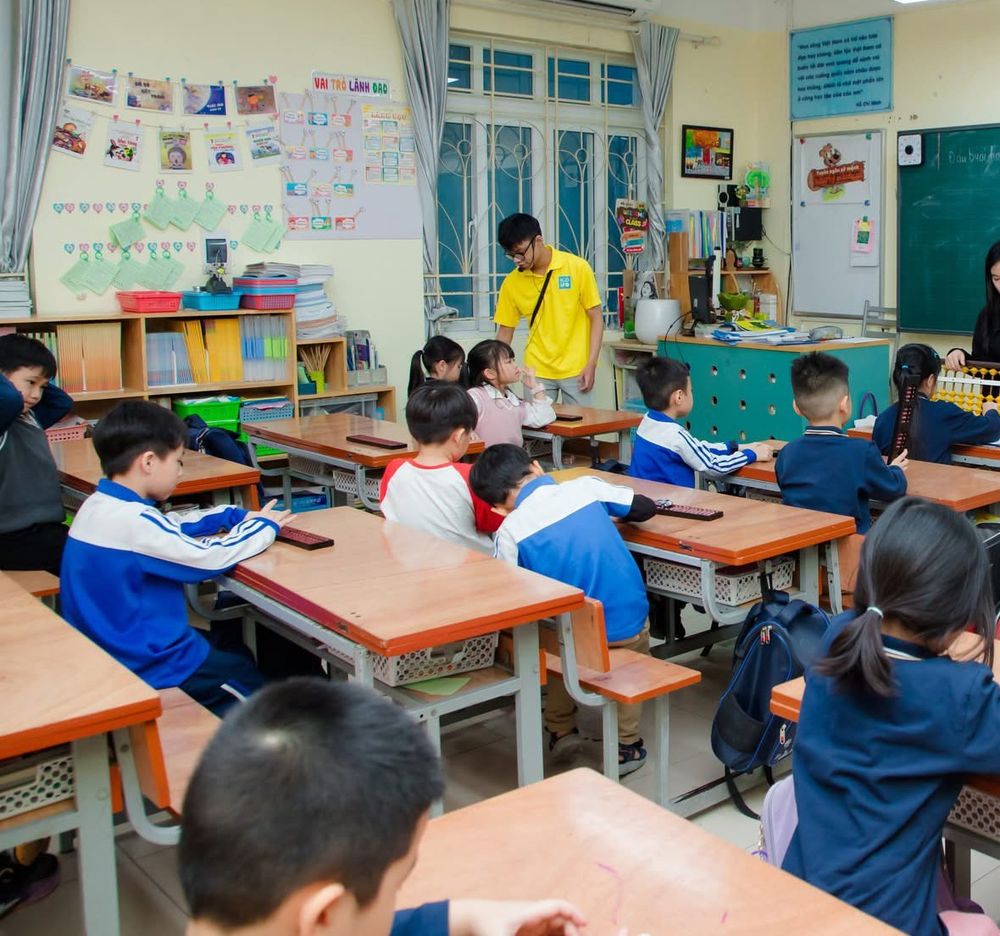
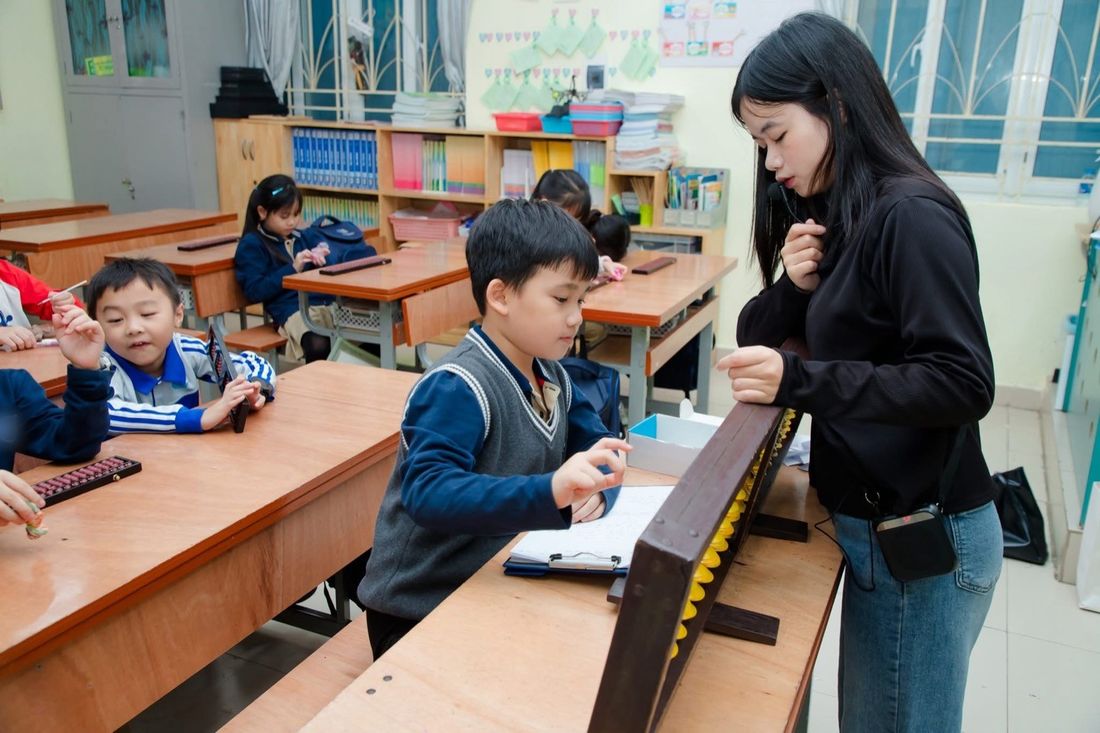
The same program and the same way of teaching – at our center or right at your child's school.


Before a club opens, we run a free 30-minute trial session for grade 1 and grade 2 students, so that children and parents can get to know soroban before registration.
We start with a free 30-minute trial lesson for grade 1 and grade 2 students. Abacuses, materials and teachers are all provided by us.
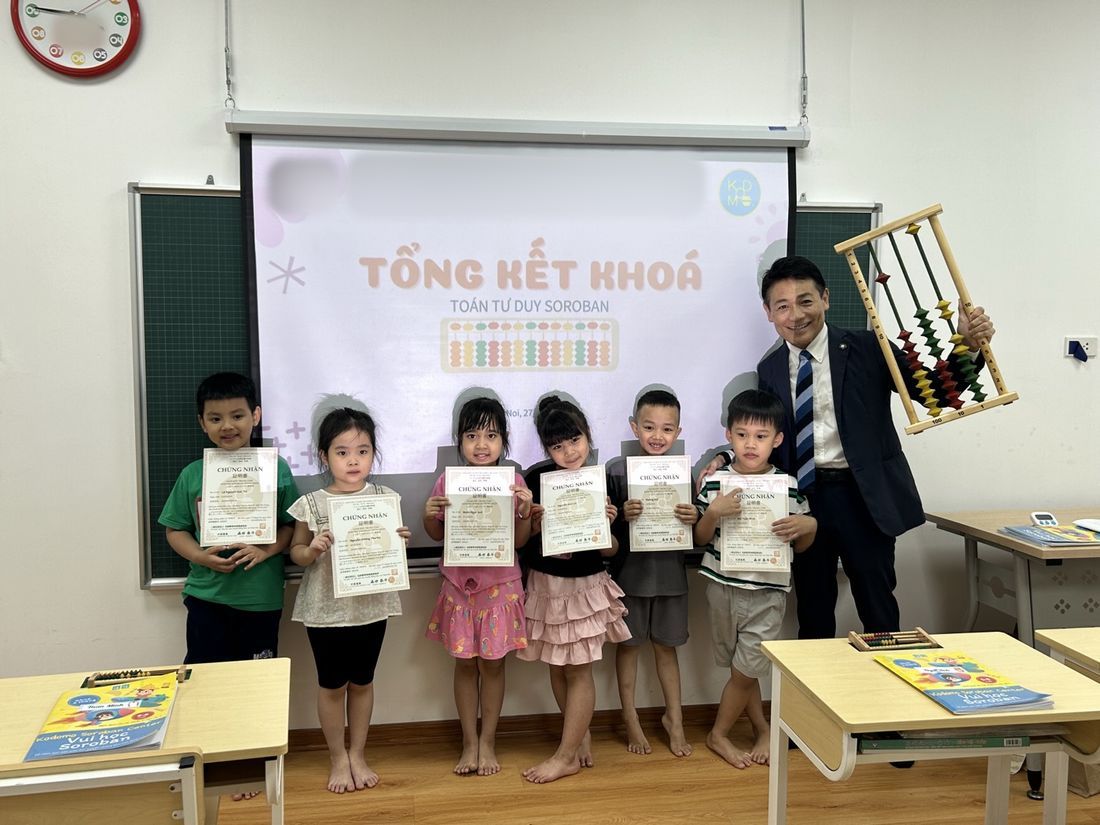
Children handle the soroban, show the numbers 0 to 9 and try their first calculation. The feeling of “I did it!” sparks their interest in the club.
After the session, the school helps pass on an information leaflet to the parents of the children who took part. With their child's own account and the leaflet, parents find it easier to decide.
We bring the sorobans, materials and teachers. The school only needs to provide a room and a time slot.
Please let us know a convenient date and time by phone or email.

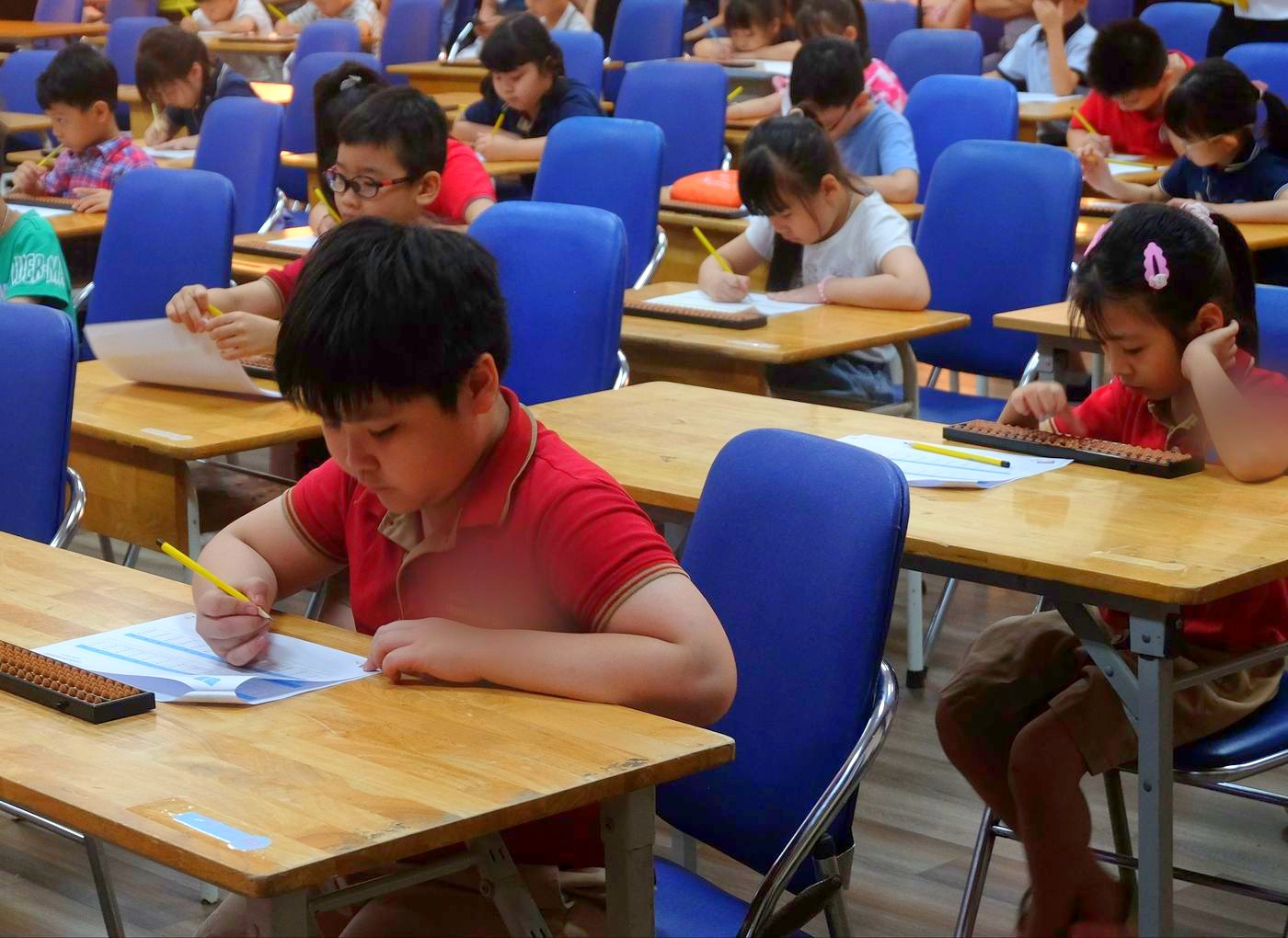
An inter-school mental calculation competition that KSC holds every year for its partner schools. The first one took place in April 2025 at a primary school in Hanoi. Every participant receives a certificate, and the top performers receive prizes.

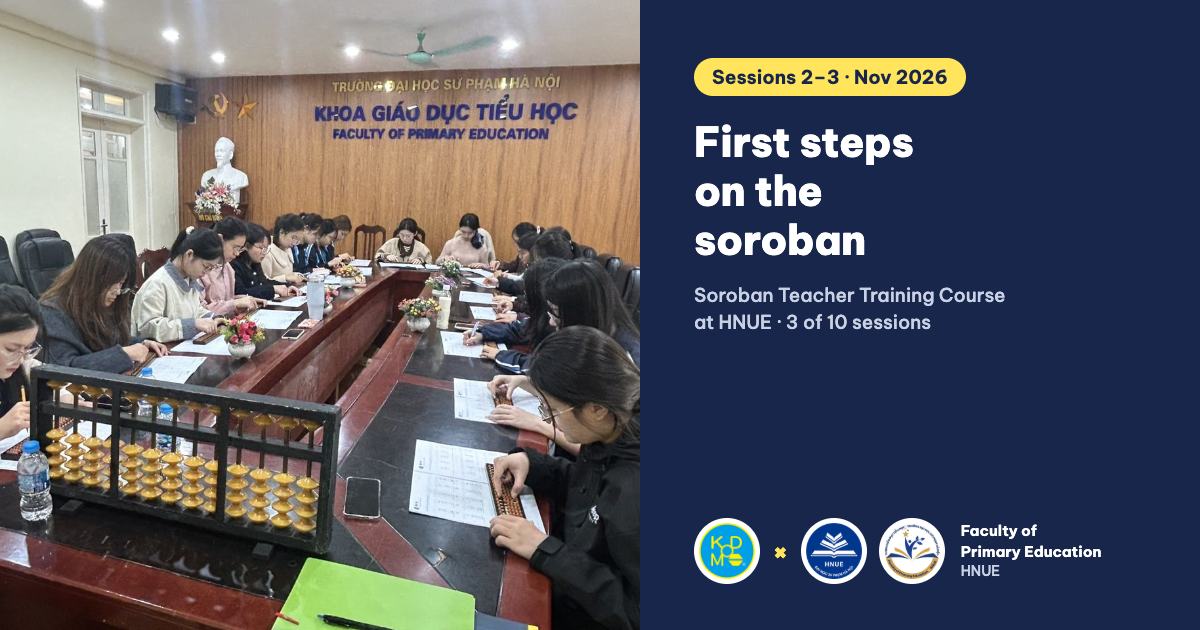
The Soroban Teacher Training Course at HNUE has completed 3 of its 10 sessions. From Session 2, the students have been learning…

On 31 Oct 2026, the Soroban Teacher Training Course for students of the Faculty of Primary Education, HNUE, began. Session 1: building…

On 16 Oct 2026, Kodomo Soroban Center (Morita Group Vietnam) signed an MOU with Hanoi National University of Education: a free 10-session…
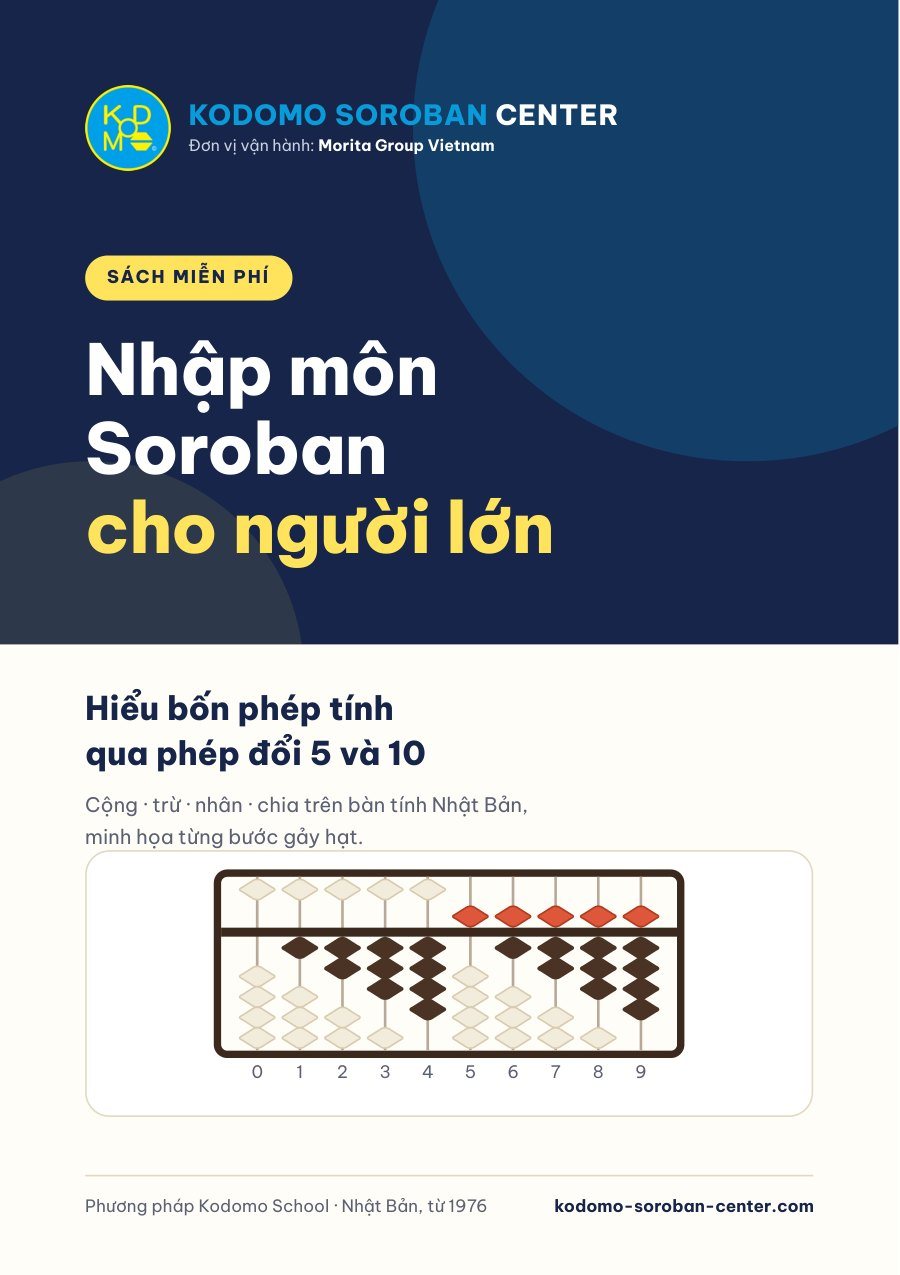
For parents who want to understand how their child learns: setting numbers on the soroban, the 5-complement and 10-complement rules, multiplication and division, with step-by-step illustrations of each bead movement. 95 pages, with answers.
Can't find your answer? Call or message us on Zalo at 096.802.8484 – we're always happy to help.
The center offers classes for children aged 5 to 12: a Kindergarten class for 5-year-olds and a Primary class.
Yes, the trial lesson is completely free. Your child joins a trial lesson to see how a soroban class works. We explain the program and the center in detail and answer all your questions. Book a trial
By Zalo message: after every session, the teacher reports what the children learned. Each term you receive the results of three skills tests, and at the end of the term a summary report with photos and videos of the children practicing. Learn more
The instructor gives extra help during class, then sets extra practice for home and follows up in the next session. Checks at the start, middle and end of each term make sure no child is left behind.
Leave your details and the center will contact you to arrange a trial lesson at a time that suits your child.
info@kodomo-soroban-center.com
Parents of club members, and schools interested in starting a club, please contact us by phone or email.