A day in the life of a Japanese elementary school student: what time school starts, how lunch works and when summer break is
What time do Japanese students go to school? Do they eat lunch at school, and when is summer break? Vietnamese parents often ask us these questions – we are Japanese and have taught soroban in Hanoi since 2022. Here is an ordinary day at a Japanese public elementary school. What stands out most: during the school day, children do many of the small jobs themselves.
Japanese elementary students usually arrive at school around 8 a.m. and leave around 2–4 p.m., depending on the school and grade.
- The school year starts on April 1; children enter grade 1 in the April after they turn 6
- Summer break usually runs from late July to late August and varies by region
- The standard elementary lesson is 45 minutes
- Kyushoku (school lunch) is eaten in the classroom and served by pupils on duty
- Every day has a morning meeting, a closing meeting and cleaning time
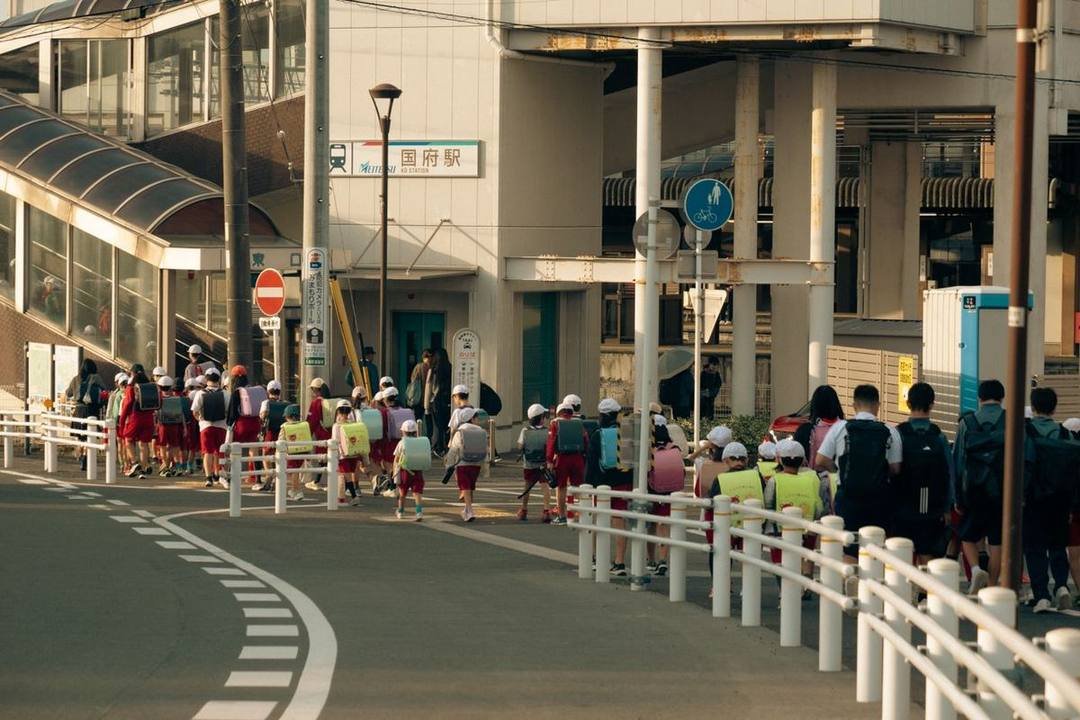
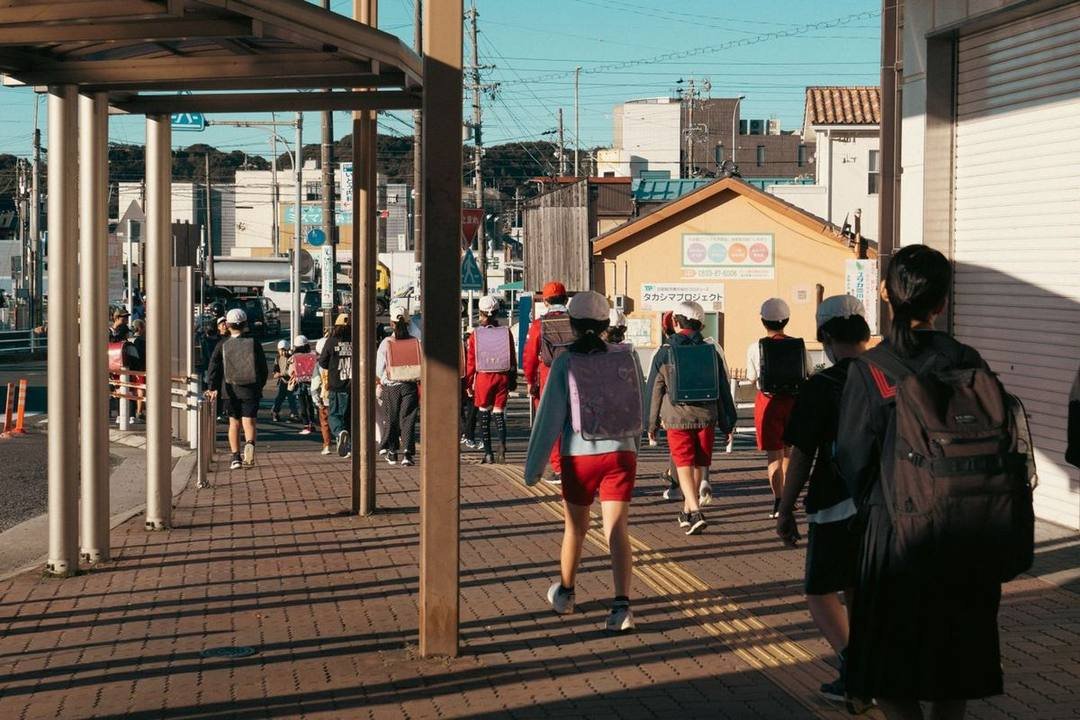
- Children usually walk to school; in some areas they walk in groups
When do Japanese students start school?
In Japan, the elementary school year begins on April 1 and ends on March 31 of the following year. Children enter grade 1 in the April after their sixth birthday and attend elementary school for 6 years. The entrance ceremony is usually held in early April.
There are three long breaks in the school year:
- Summer break: usually from late July to late August – about 35–40 days in many areas. Children still get homework during the break.
- Winter break: from late December to early January, about 2 weeks.
- Spring break: from late March to early April, about 2 weeks.
Holidays at public schools are set by each local board of education (kyōiku iinkai), so the dates differ from place to place. In colder northern areas such as Hokkaido, summer break is usually shorter and winter break longer.
A day at a Japanese elementary school: morning to afternoon
Below is a “typical” day pieced together from the schedules of many public schools; actual times vary by school, grade and day of the week. You will notice that a Japanese school day mixes lessons with “shared jobs”: greeting each other, serving lunch, cleaning.
- Around 8:00 a.m.Walking to school
Children carry a randoseru backpack and follow the route set by the school. In some areas, children from the same neighborhood meet at one spot and walk together (shūdan tōkō).
- At the entranceChanging into indoor shoes
Children take off their shoes, put them in their own cubby in the shoe lockers (getabako) and put on uwabaki – cloth shoes worn only inside the school.
- Around 8:15–8:35 a.m.Morning meeting (asa no kai)
Greetings, attendance, a health check and a look at the day’s schedule. It is usually led by the pupil on daily duty (nicchoku).
- Morning4 lessons
Each lesson is 45 minutes as standard, with short breaks in between. Many schools have a longer recess of about 20 minutes in mid-morning.
- Around 12:15–1:00 p.m.Kyushoku – school lunch
The whole class eats together in the classroom. The pupils on lunch duty serve the food to everyone.
- After lunchLunch recess
About 20 minutes of play. Japanese elementary schools usually have no nap time.
- Early afternoonCleaning time (sōji)
About 10–20 minutes, depending on the school. Children split into groups to clean classrooms, hallways, stairs and toilets.
- AfternoonAfternoon lessons and closing meeting (kaeri no kai)
Younger grades often have just 1 afternoon lesson; older grades usually have 2. At the end of the day, the class looks back on the day, hears notices for tomorrow and says goodbye.
- Around 2–4 p.m.Going home
Younger grades leave earlier, older grades later. Children walk home or go to after-school care (gakudō).
Daily duty, kyushoku and cleaning: what do children do themselves?
In Japanese schools, the class’s shared jobs are divided among the pupils and rotated so that everyone gets a turn. The nicchoku – the pupil on daily duty – leads the morning and closing meetings, while tōban groups handle the other shared jobs.
Kyushoku (給食) is the lunch provided by the school; almost all public elementary schools in Japan serve it. Pupils take turns on kyūshoku-tōban – lunch duty: they put on a white coat or apron, a cap and a mask, then serve the food to the whole class. After eating, each child clears their own dishes, and the duty group returns the food containers and dish baskets to their set place.
Lunchtime is also a time for learning: washing hands properly, setting out the tray, using chopsticks, good table manners. Sōji is the same – children even clean the schoolyard and the toilets. In other words, in Japan, both lunch and cleaning time are seen as part of learning at school.
Why do Japanese schools have children clean, and how can parents use the idea at home? See Why do Japanese students clean their own schools?
After school: gakudo, extra classes and homework
Once school lets out in the afternoon, where do Japanese children go and what do they do?
For elementary pupils whose parents work during the day. After school, children play and spend time in a spare classroom at school or at a children’s center (jidōkan).
In 2021 surveys, swimming was the most common class among elementary pupils, and piano and English were also popular. Calligraphy and soroban are classes many parents remember from their own childhood.
For younger grades, it is often reading aloud to a family member (ondoku), handwriting practice and an arithmetic drill book (keisan doriru).
To learn more about the Japanese abacus, see What is soroban?
How are Japanese and Vietnamese elementary schools different?
Compared with elementary schools in Vietnam, a few differences stand out:
In Japan
- The school year starts on April 1
- Summer break runs from about late July to late August
- Standard lesson length: 45 minutes
- Kyushoku is eaten in class and served by pupils; then recess, no nap
- Daily cleaning time: classrooms, hallways, toilets
In Vietnam
- Opening ceremony on September 5; the school year ends by May 31
- Summer break runs from about June to late August
- Under the 2018 curriculum, elementary school runs 2 sessions a day; each lesson is 35 minutes
- Many schools offer “bán trú”: children eat lunch and nap at school
- Classroom duty by group: sweeping the room, wiping the board, arranging desks
Neither side is “right”. Each has its own rhythm that suits its own circumstances – what is worth borrowing are the small habits inside the school day.
4 small habits parents can start at home
There is no need to change schools or schedules. The small habits of a Japanese school day work just as well in Hanoi – as long as parents wait for the child to do it, instead of doing it for them to save time.
- Pack the school bag the night before: your child checks the class schedule and packs their own books; you only ask “is everything there?”.
- Line up shoes neatly every time they come home, just like changing shoes at the school entrance.
- Clear up after eating: carry their own dishes to the sink and wipe their place at the table.
- “Itadakimasu” before meals, “Gochisōsama” after: a short thank-you the whole family says together.
Habits don’t come from reminders, but from small things repeated every day.
Add one habit at a time, and keep it for a few weeks before adding the next. See also 7 habits of independence from Japanese schools.
The same habits in our soroban class
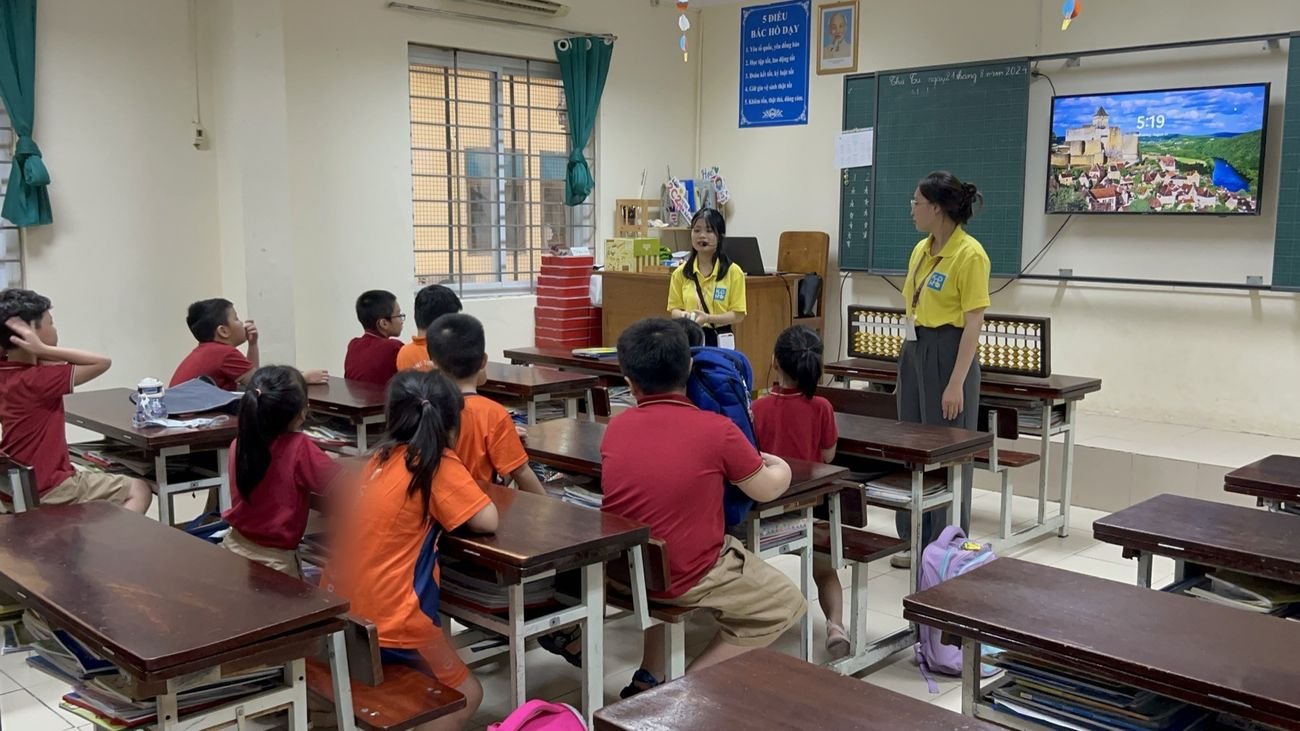
We teach soroban using the method of Kodomo School (Japan, since 1976). Each lesson is 60 minutes with 3–5 children per class, and every lesson starts with a greeting and preparation, and ends with tidying up and a greeting – the same rhythm as the morning and closing meetings at a Japanese school.
In between come grid calculation, soroban, mental math and Flash Anzan; even the longest part is only about 20 minutes.
Children take out their abacus, pencil and worksheet and put them in the right place before starting. At the end, they clear the abacus to 0, put their things away and check the desk before the closing greeting – a mini “cleaning time”.
See how a lesson works. Besides our center at Vinhomes Gardenia, we also run soroban clubs at schools. The trial lesson is free – call or message us on Zalo at 096.802.8484, or sign up on the Contact page.
Frequently asked questions
What time do Japanese students go to school?
Many public elementary schools ask pupils to arrive by around 8:00–8:20 a.m.; the morning meeting starts right after. School usually ends around 2–4 p.m.: younger grades leave earlier, and older grades with 6 lessons leave later. Exact times vary by school.
What month do Japanese students start school?
April. The Japanese school year starts on April 1 and ends on March 31 of the following year. Children enter grade 1 in the April after their sixth birthday; the entrance ceremony is usually in early April.
When is summer break for Japanese students, and how long is it?
They do get a summer break. It usually runs from about late July to late August – about 35–40 days in many areas. Each locality sets its own dates; in colder areas such as Hokkaido, summer break is usually shorter and winter break longer.
Do Japanese students eat lunch at school?
Yes. Almost all public elementary schools serve kyushoku. The whole class eats together in the classroom, and pupils on duty serve the food. Lunch is followed by recess; Japanese elementary schools usually have no nap time.
Do Japanese elementary students take extra classes?
Many do. In 2021 surveys, swimming was the most common class among elementary pupils, piano and English were also popular, and calligraphy and soroban are long-familiar classes. Children whose parents work can spend time at after-school care (gakudō) once school ends.
Try a free soroban lesson
Classes of 3–5 children at Vinhomes Gardenia (Hanoi), 60 minutes each, taught exactly as in Japan. Phone · Zalo 096.802.8484.
Written by the teaching team of Kodomo Soroban Center, following the method and textbooks of Kodomo School (Japan, teaching soroban since 1976). The center is licensed by the Hanoi Department of Education and Training, and our project is a 2026 EDU-Port Nippon supported project of Japan’s Ministry of Education (MEXT).
About usEDU-Port NipponEducation licenseRelated articles
Why do Japanese students clean their own schools – and how to bring the habit home
Why do Japanese students clean their schools every day? What cleaning time looks like, what children learn from it, and how to…
What should a 5-year-old learn? 6 activities and how to choose by your child’s temperament
What should a 5-year-old learn? 6 popular activities – swimming, martial arts, music and dance, art, English and thinking math: what each…
How to learn the times tables fast: 7 fun ways for kids, tips for the 7, 8 and 9 tables and a free worksheet
How to help your child learn the times tables fast: understand multiplication first, start with easy tables, only 36 facts to learn,…