 Thị trấn WakumaStudent login
How to teach your child to study on their own: 6 small habits from Japanese families
“If I don’t remind them, they don’t study; if I remind them too much, they get upset.” Many parents tell us this. We are Japanese soroban teachers working with children in Hanoi, and what we see is this: studying on their own isn’t a personality trait children are born with – it’s a habit built from small things repeated every day. This article is about the “how”: when, where and in what order to study.
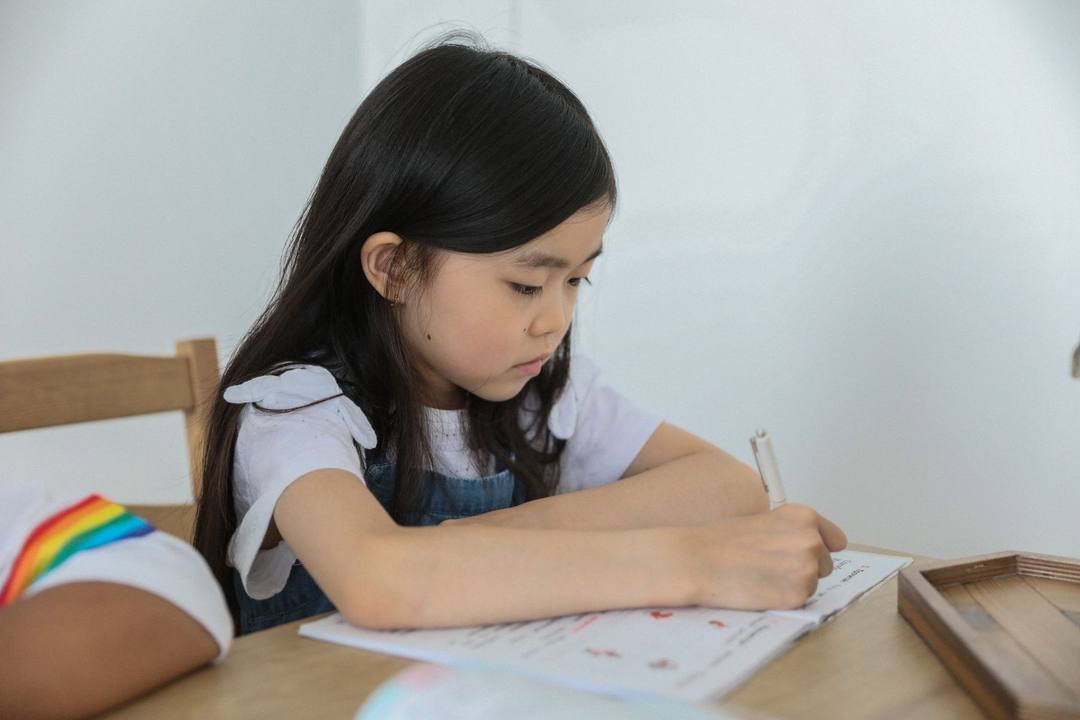
To help your child study on their own, set up a fixed study routine – same time, same place, same order – and gradually step back, instead of reminding them every day.
- Same study time every day, chosen together as a family
- A fixed study spot, with only study things on the desk
- Today’s to-do list, checked off by your child
- A timer: 10–15 minutes per part
- Your child packs their bag the night before
- Parents watch over, don’t do it for them, and review together afterward
What does it mean to study on your own? Why doesn’t my child do it, no matter how often I remind them?
Studying on their own means your child starts, keeps going to the end and checks their work – without someone reminding them at every step. For elementary school children, this comes less from willpower than from a clear routine and the feeling “I can do it.”
When you say “Go study!” every evening, you are the one deciding when study time starts, and your child gets used to waiting for the reminder. So instead of reminding louder, let a fixed routine do the reminding:
Your child doesn’t have to decide “Am I studying today?”
Sitting down there means: it’s study time.
Your child knows what comes next without asking you.
If your child also avoids studying, complains of being tired or is afraid of mistakes, read My child is “lazy” about studying – what should I do? first.
How to help your child study on their own: 6 small daily habits
Some of these also appear in the advice many Japanese elementary schools give parents; the rest come from our own teaching experience. Pick 1–2, keep them for a few weeks, then add more.
- Same time every day – chosen together as a family
For example: come home from school, have a snack and a short rest, then study, then play. Each family can choose its own order; what matters is that every day is the same. A study time agreed on with your child is usually easier to keep than one set by parents alone.
Start at homeHave your child write the study time on a piece of paper and stick it up at their study spot. On busy days, move the time rather than skipping it.
- A fixed study spot, with only study things on the desk
Their own desk or a corner of the dining table both work, as long as it’s always the same place. Before starting, your child puts away toys and moves phones and tablets somewhere else. For how to set up the desk, see My child can’t focus when studying.
- Today’s to-do list – written and checked off by your child
A small piece of paper with 2–4 tasks: “Math page 12”, “Read the lesson twice”, “Pack my bag”. Younger children can draw pictures instead. When a task is done, your child checks it off. When your child looks at the list, not at you, to know what comes next, they have started studying on their own.
Start at homeIn the first week, write the list together. From the second week on, your child writes it; you only ask, “How many tasks today?”
- A short timer: 10–15 minutes per part
A timer shows your child where the finish line is: when it rings, it’s break time. Between two parts, they stand up and get a drink of water. Let your child press the start button – that is their very first step of “starting on their own”.
- The night before, your child gets ready for tomorrow
In Japan, many elementary school students pack their randoseru backpack themselves in the evening, following the next day’s timetable; in first grade, parents often do it with them at first. Some schools suggest that parents simply ask before bedtime, “Are you all set for tomorrow?” See also a day in the life of a Japanese elementary school student.
- Parents watch over – no step-by-step reminders, no doing it for them
In Japanese this is called mimamoru: staying close, but letting your child do it (see Japanese-style parenting for ages 3–6). When your child asks a question, try asking back first: “What do you think the first step is?” When they’re done, look over the work together. Many elementary schools in Japan also ask parents to look over their child’s home study and sign it or write a few words.
What grade can children study on their own? A guide by grade
There is no “right” age for studying alone. The table below is a guideline from our experience, close to the katei gakushū no tebiki (home study guide) that many Japanese elementary schools give parents. Every child has their own pace.
| Your child | Parents | |
|---|---|---|
| Grade 1 | Sits down at the set time and follows a picture to-do list | Stay nearby and watch; review together when done |
| Grades 2–3 | Starts alone and checks what homework there is today | Don’t sit beside them the whole time; come and review at the end |
| Grades 4–5 | Plans the study session and the whole week | Talk with your child about the plan once a week |
What matters is the direction: the parent’s role gets smaller, and the part your child decides gets bigger. If your child is falling behind in class, help with that first – see My child learns slowly – what should I do?
What should you say instead of “Go study!” so your child starts on their own?
Orders teach children to wait for orders. Questions make them decide for themselves – and deciding for themselves is the first step to studying on their own.
Questions that let your child decide
- “What time are you starting today?”
- “How many tasks are left on your list?”
- “Which subject do you want to do first?”
- “What’s the hardest part today?”
Reminders and orders
- “Go study!”
- “When are you finally going to sit down?”
- “Hurry up, aren’t you done yet?”
- “Let me just do it, it’s faster.”
When your child starts without a reminder, say so: “You sat down at your desk on time all by yourself today.” They’ll know you notice exactly that.
One less reminder, one more question.
My child kept it up for a few days, then stopped – what should I do?
This is very common. When the routine breaks down, fix the routine before blaming your child.
- Show your child what they’ve already done. Put a calendar at the study spot; after each session, your child colors in one square. A row of colored squares is a reason to keep going – no big reward needed.
- If a day gets missed, start again the next day. No scolding, no making up for it with double the work.
- Make it smaller instead of stopping. On busy days, do just the first task on the list. Keeping the time and place matters more than doing everything.
- Review the routine, not just your child. Does study time fall when your child is most tired? Is the list too long? Change one thing and try for another week.
The goal isn’t that your child never forgets – it’s that they know how to get back on track.
How does our soroban class build the habit of studying on their own?
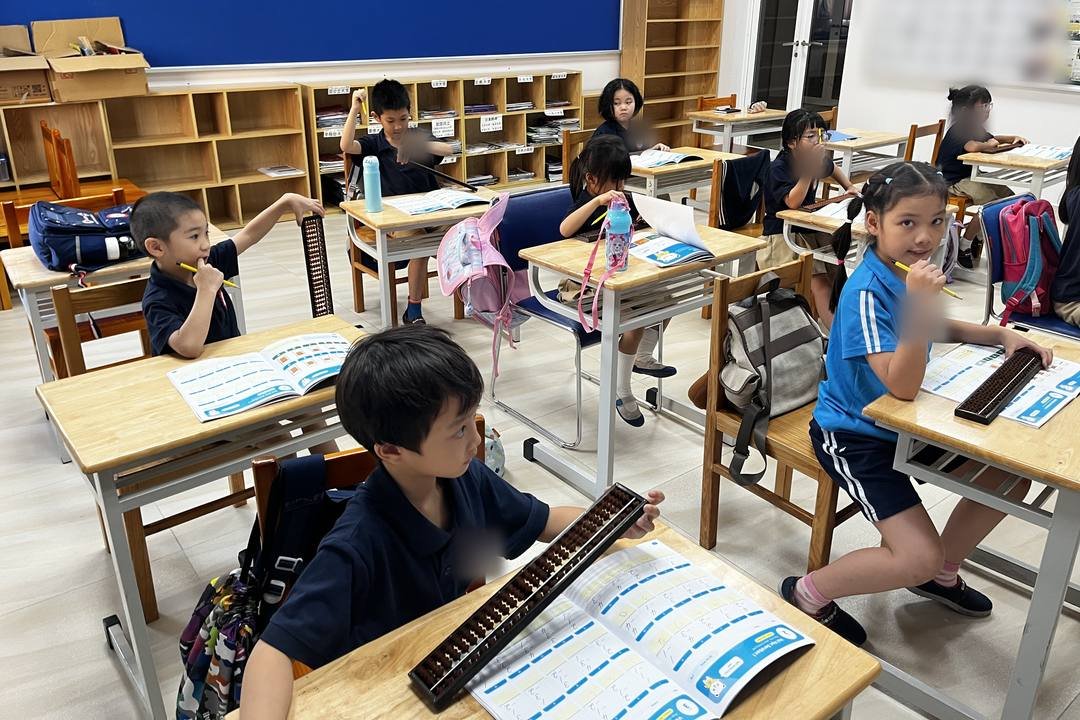
At Kodomo Soroban Center, every 60-minute lesson follows the same 7 parts in the same order: opening greeting, getting ready (children take out their own materials and clear the abacus to zero), grid calculations, soroban, mental math and Flash Anzan, tidying up, closing greeting. Even the longest part is only about 20 minutes.
Because the order never changes, more and more children gradually know what comes next without being told. At the end of the lesson, children record their results on a progress sheet themselves, and every lesson comes with a worksheet to take home.
Classes at our center in Vinhomes Gardenia have only 3–5 children. At home, students can practice more in the Soroban Practice Room (in Vietnamese) with their member code; its Learning Log keeps track of the days they practiced.
One of our free soroban worksheets can also be a task on today’s list. See how a lesson works, and sign up for a free trial lesson on our Contact page or by phone or Zalo at 096.802.8484.
Frequently asked questions
At what age can a child study on their own?
There’s no single age for every child. In our experience, many first graders still need a parent nearby; in grades 2–3, many can start on their own and parents only review at the end; in grades 4–5, children can practice making their own plans. This is a guideline, not a target your child has to meet.
Should I pay my child to study on their own?
We don’t recommend it. Money is a push from the outside; in our experience, once the reward stops, children tend to stop too. Instead, let your child see what they’ve done – for example, a calendar with one square colored in each day – and praise the specific effort they made.
My child will only study if I sit next to them – what should I do?
For first graders, this is quite common. Let the to-do list and the timer gradually “take your place”: your child looks at the list to know what comes next and at the timer to know when it ends. You can sit at the same table doing your own work, then just come to check when the timer rings.
How long should my child study at home each day?
In Japan, many elementary schools use “grade × 10 minutes” a day, including homework, as a guideline: about 10 minutes in grade 1 and about 30 minutes in grade 3; some schools add another 10 minutes. It’s a guideline, not a rule. Studying a little every day matters more than studying for a long time.
How do I stop my child from playing on the phone while studying?
During study time, keep phones and tablets away from the study spot – for example, in a box in another room – and don’t use your own phone next to your child either. Make phone time a separate rule, and don’t use it as a reward for studying.
Try a free soroban lesson
Classes of 3–5 children at Vinhomes Gardenia (Hanoi), 60 minutes each, taught exactly as in Japan. Phone · Zalo 096.802.8484.

Written by the teaching team of Kodomo Soroban Center, following the method and textbooks of Kodomo School (Japan, teaching soroban since 1976). The center is licensed by the Hanoi Department of Education and Training, and our project is a 2026 EDU-Port Nippon supported project of Japan’s Ministry of Education (MEXT).
About usEDU-Port NipponEducation licenseRelated articles
Let Them Fail (a Little): How Natural Consequences Raise Independent Kids
Doing too much for your child? Small, safe failures – oversleeping, a forgotten notebook, spilled milk – teach independence, Japanese style. 8…
My child learns slowly – what should I do? 7 ways to help them keep up without pressure
Is your child slow to learn and understand? 5 common reasons, 7 ways to help at home, 4 things to avoid, and…
Converting units in grade 3: a length, weight and capacity chart and how to avoid mistakes – with a free worksheet
Grade 3 unit conversion: a chart for mm, cm, dm, m, km, g, kg, ml and l; multiply going to a smaller…