My child is “lazy” about studying – what should I do? Try a Japanese teacher’s approach instead of scolding
“The moment they sit down, they’re ‘tired’; open the book and they need a drink of water; it takes three reminders to pick up a pencil.” Many parents tell us this, then sigh: “My child is so lazy.” We are Japanese soroban teachers working with children in Hanoi, and what we see is this: behind “lazy” there is almost always a specific reason – and scolding rarely gets to that reason.
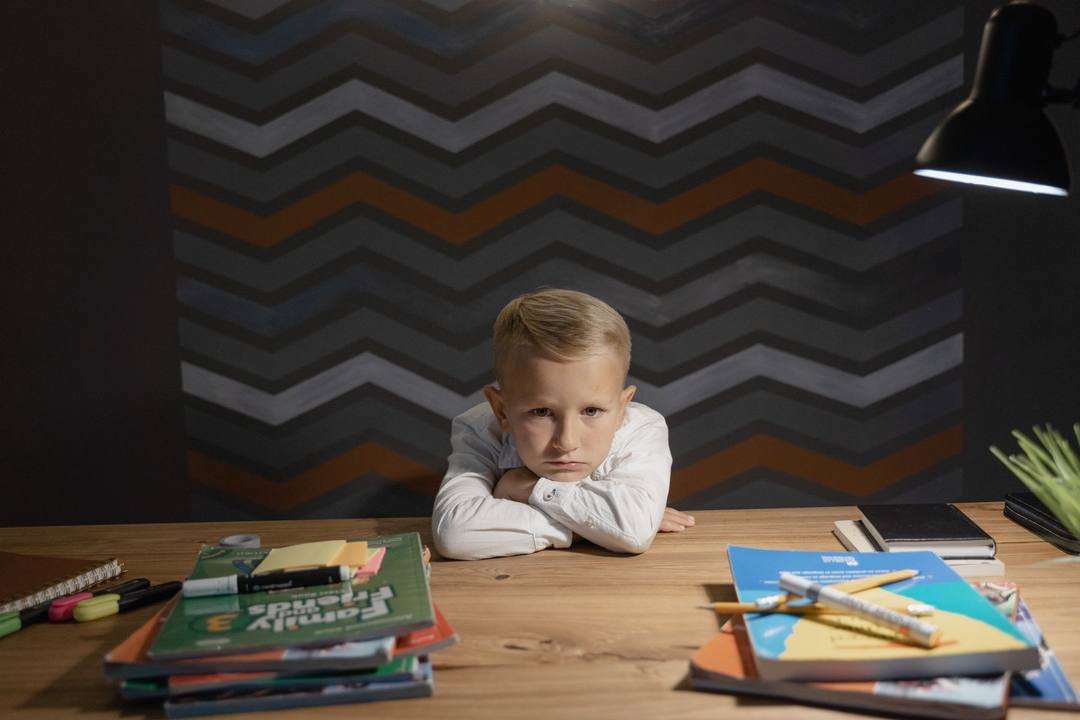
A “lazy” child usually doesn’t lack willpower – they are stuck on something specific. Find out what it is, then make getting started very small and very easy.
- Look for the reason first: too hard, too easy, tired, afraid of mistakes…
- Make the first step tiny: “just 1 problem”, “just 5 minutes”
- Same time, same place every day, so studying becomes a habit
- Show the finish line and let them see what they’ve done
- Praise effort and approach, not being “smart”
- Don’t compare, don’t threaten, don’t do it for them
Why are children lazy about studying? 6 common reasons behind it
We rarely meet a child who simply doesn’t want to do anything. Much more often, it is one of the reasons below – sometimes several at once.
If they can’t do it, they avoid it; if it’s too easy, they get bored. “Lazy” is sometimes a child’s way of saying “I don’t understand.”
After a long day at school, children need a rest and a snack before studying again.
“Go do your homework” is too big a task. They can’t see the first step.
If a mistake means criticism, the safest choice is… not to try.
A notebook page can’t compete with a glowing screen – not even for adults.
When every study session ends with yelling, children learn that sitting down at the desk is something to fear.
Watch your child for a few days: which problem, what time of day, which subject makes them stop? Asking “why don’t you want to start yet?” helps more than “why are you so lazy?”. If it’s only math your child avoids, see My child is struggling with math – what should I do?
5 things Japanese teachers often do to help children sit down on their own
Instead of saying “try harder”, make getting started easier. Here are 5 methods teachers in Japan often use – all of them work at home.
- A tiny first step: “just 1 problem”, “just 5 minutes”
The hardest part is starting. When the first step is so small that your child thinks “that’s easy”, many keep going once the pencil is in their hand.
Start at homeInstead of “Go do your homework!”, try “Let’s just do the first one.” Once that one is done, it’s fine to take a break.
- Same time, same place every day
When study time is a fixed part of the day, like dinner, children don’t have to “decide” whether to study. In Japan, many families have children study at the living-room or dining table, near their parents, rather than alone in their own room.
Start at homePick a time that’s easy to keep, for example after an afternoon snack. For how to split the time and clear the desk, see My child can’t focus when studying.
- Make the finish line visible
“Study until it’s done” is too long for young children. A small chart listing today’s 3 tasks, which they check off one by one, helps them see “just one more to go”.
- Finish and get a “hanamaru”
In Japan, many elementary school teachers draw a hanamaru – a flower-shaped circle – on good work. It isn’t money or a toy, just a small sign that says “I saw how hard you tried.”
Start at homeDraw a flower on the page your child just finished, or put a sticker on the calendar so they can see their streak of study days.
- Talk about mistakes starting with what they got right
Instead of “3 wrong!”, say “7 right. Let’s look at these 3 together.” Only when mistakes stop meaning scolding do children dare to try.

How should you praise so your child wants to keep learning?
For the same good piece of work, two ways of praising can leave two very different lessons in a child’s mind.
Praise effort and approach
- “You made it to the last problem!”
- “Did you figure out this way yourself? Nice.”
- “This was hard yesterday, and today you got it.”
- “You made a mistake and tried again!”
Praise being “smart”
- “You’re so smart!”
- “This is easy for you.”
- “You were born good at math.”
In 1998, psychologists Claudia Mueller and Carol Dweck (Columbia University, USA) praised elementary school students after the same set of problems in one of two ways: “You must be smart at these problems” or “You must have worked hard at these problems.” When the children later met harder problems, those praised for effort persisted more, enjoyed the work more and did better than those praised for intelligence.
One way to understand it: if getting it right is because you’re “smart”, then getting it wrong means “I’m not smart” – so children avoid hard problems. A child who looks lazy is sometimes just avoiding mistakes.
Praise what your child did, not what your child “is”.
4 things not to do when your child is lazy about studying
All of these come from a very understandable impatience, but they often make children even less willing to sit down.
- Comparing them with friends or siblings. “Even your little brother can do it, so why can’t you?” doesn’t show them how – it only teaches them they are worse.
- Using the phone as a reward, or threatening to take it away. Studying becomes “the price you pay” for screen time. Keep phone time as a separate rule, not tied to schoolwork.
- Making them sit for a long time. Two hours in the chair with their mind elsewhere only teaches them that studying means enduring.
- Doing the homework for them to get it done. The homework gets turned in, but the child learns “I don’t need to try – someone will do it for me.” See also How do Japanese parents raise independent children?
The goal is not for your child to sit for a long time today, but to still want to sit down tomorrow.
How long should children study at home each day? A guide by age
The times below are guidelines from our teaching experience, not fixed numbers. Every child has their own pace; on days your child is tired, doing less is fine.
- Ages 5–6Learning through play, about 10 minutes
Counting objects, coloring, puzzles, reading stories together. No “homework” needed yet – just getting used to sitting at the table and enjoying it.
- Grades 1–2About 15–20 minutes, with a break
Split it into two short parts; in between, your child gets up for a drink of water. Stay nearby, but let them do the work.
- Grades 3–5Practicing making their own plan
Your child writes down what to do today and in what order. Parents gradually shift from “the one who reminds” to “the one who looks back together” at the end of the day.
A little every day beats a lot once in a while. If the school already gives plenty of homework, don’t add more.
Short parts make it easier to keep going: an example from our soroban class
At Kodomo Soroban Center (Vinhomes Gardenia, Hanoi), a 60-minute lesson is split into 7 short parts: opening greeting, getting ready, grid calculations, soroban, mental math and Flash Anzan, tidying up, closing greeting. Even the longest part is only about 20 minutes.
In our experience, when each part is short and has a clear end, many children can follow the whole lesson. At home, you can also split 20 minutes into 3–4 small tasks – for example, starting with one of our free worksheets.
Students at our center can also practice at home in the Soroban Practice Room (in Vietnamese) with their member code. See how a lesson works, and sign up for a free trial lesson on our Contact page or by phone or Zalo at 096.802.8484.
When should you talk to the teacher?
Many children change little by little once the way they study at home changes. But if it goes on for weeks even though you’ve been patient, if your child changes suddenly (once cheerful, now unwilling to study), if the same thing happens at school, or if your child often squints, leans close to the page or keeps asking you to repeat things – talk with their homeroom teacher, and have their eyes and hearing checked. Sometimes what looks like “lazy” is simply a child who can’t see the board clearly or can’t hear everything the teacher says.
Frequently asked questions
Is a child lazy about studying because of their personality?
Usually not. From what we see, “lazy” children are usually stuck on something specific: work that is too hard or too easy, tiredness, not knowing where to start, fear of mistakes, or a phone close by. Once that reason is dealt with, many children gradually start on their own.
Should I reward my child with money or toys for studying?
We don’t recommend it. In our experience, when the reward is money or toys, children tend to study only when there’s a reward. Use small signs instead, like a hand-drawn flower or a sticker on the calendar, plus specific praise for their effort.
My child will only study if I sit next to them – what should I do?
For grades 1–2, this is quite normal. Step back gradually: first sit next to them, then sit at the same table doing your own work, then stay in the room but farther away, and finally just come to check when they’re done. Each step can last about 1–2 weeks, depending on your child.
How long should a first grader study at home each day?
For many first graders, about 15–20 minutes a day is a reasonable guide, split into two short parts with a break in between. More important than the length is consistency: same time, same place every day.
When should I talk to the teacher?
When it goes on for weeks, when your child changes suddenly, when the same thing happens at school, or when your child seems not to see or hear well. Talk with their homeroom teacher and have their eyes and hearing checked.
Try a free soroban lesson
Classes of 3–5 children at Vinhomes Gardenia (Hanoi), 60 minutes each, taught exactly as in Japan. Phone · Zalo 096.802.8484.

Written by the teaching team of Kodomo Soroban Center, following the method and textbooks of Kodomo School (Japan, teaching soroban since 1976). The center is licensed by the Hanoi Department of Education and Training, and our project is a 2026 EDU-Port Nippon supported project of Japan’s Ministry of Education (MEXT).
About usEDU-Port NipponEducation licenseRelated articles
Shichida, Montessori, Kumon, Soroban: how do these 4 approaches to education differ?
What are the Shichida and Montessori methods, and how do they differ from Kumon and soroban? Comparing 4 early-education approaches for ages…
Mental math tricks for kids: addition, subtraction, multiplication – and why soroban lasts longer than tricks
Mental math tricks for kids with examples: making 10, adding by place value, subtracting by adding, ×5, ×9 and ×11 – plus…

What is Kumon? How it works, its strengths and what to know before you sign up
What is Kumon – a company, a school or a subject? The Japanese worksheet-based learning method: how it works, its strengths, which…