 Thị trấn WakumaStudent login

The Soroban Teacher Training Course Begins at Hanoi National University of Education – Session 1: Building a Japanese-Style Classroom

On 31 October 2026, the Soroban Teacher Training Course for students of the Faculty of Primary Education at Hanoi National University of Education (HNUE) began. The 10-session course is run jointly by Kodomo Soroban Center (Morita Group Vietnam JSC) and the university, under the Memorandum of Understanding signed on 16 October 2026.

Session 1: Building a Japanese-style classroom
The first session was taught by Dr. Taito Morita, CEO of Morita Group Vietnam JSC, with interpretation by Ms. Nguyen Minh Ha, Director of Kodomo Soroban Center. Dr. Nguyen Thuy Chung, Dean of the Faculty of Primary Education, joined the session. Before touching a soroban, the students started with the basics of a Japanese classroom: manners, posture, tidiness – and children’s self-esteem.
The session began with a surprise: with no explanation, the class was asked to “Stand up – Bow – Sit down”. Those few seconds, he then said, already held the whole theme of the day. A greeting is the “switch” that starts learning time.

The teaching team
Together with Dr. Taito Morita, two people will accompany the students throughout the course.
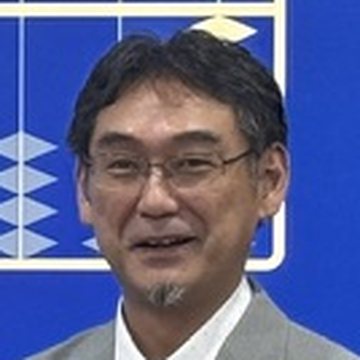
A Japanese soroban expert living in Hanoi. From Session 2, he teaches the soroban and mental arithmetic. In Session 1, Dr. Taito Morita introduced him as one of Japan’s leading soroban experts.

Takes part in all 10 sessions and is in charge of teaching methods and the parts taught in Vietnamese. In Session 1 she interpreted for Dr. Taito Morita; from Session 2 she interprets Mr. Komine’s lessons.
Why start with attitude?
In Japan, a soroban class is not just a place to learn calculation – it is a place to raise people, balancing mind, character and body. Greeting, posture and tidying up are things every child can do, which makes them the best place to start.
- Every child can do it
Greeting, posture, tidying up – even a child who is not yet good at calculation can do these.
- Praised in every lesson
The teacher praises the child specifically, right when they do it: “I did it!” in every lesson.
- Self-esteem grows
The child compares themselves with who they were yesterday, not with other children.
He told the story of a shy pupil in Japan who never greeted anyone when coming into class. He kept greeting the child with a smile every lesson; a month later, the child was saying hello loudly. Children change through the way adults speak to them.
The 5 classroom “kata”
A “kata” is a habit done in the same order in every lesson: the whole class does it together, and the teacher sets the most careful example.
- Greeting and bowing
“Stand up – Attention – Bow – Sit down”. Say the greeting first, then bow.
- Handing and receiving
With both hands, turned so the other person can read it, with “Here you are” – “Thank you”.
- Caring for your tools
Carry the soroban with both hands; do not shake it or play with it.
- Posture: “Gū – Peta – Pin”
One fist between your tummy and the desk, both feet flat on the floor, back straight. The left hand holds the soroban, the right hand moves the beads.
- Tidying up and your chair
When you leave your seat, push the chair in. “Leave it cleaner than you found it.”
“Tiên học lễ, hậu học văn” – “first learn manners, then learn knowledge” – is a saying seen in schools across Vietnam. What is Japanese is turning that spirit into “kata”: habits repeated in every lesson.
Not just listening – trying it out
- The whole class practised the Japanese start-of-lesson greeting: “Stand up – Attention – Bow (Onegaishimasu) – Sit down”.
- They passed the textbook to the person next to them with one hand, then with both hands – and felt the difference.
- Called by name, each student answered “Yes!”, came to the front and received their own soroban with both hands.
- In pairs, they discussed: as a teacher, what would you say to a child who bows as a joke, a shy child who cannot say hello, or a child who runs home without tidying up?
4 principles for the teacher
- The teacher is the most careful of all – children copy what the teacher does more than what the teacher says.
- Give the reason in one sentence – not an order, but “If you do this, then…”.
- Praise with the name and the action – “An, you pushed your chair in so neatly!” instead of “Well done!”.
- Do not compare, do not scold – “Let’s try once more”, and praise right away when the child does it.
Homework for one week: push your chair in when you leave your seat, and hand things over with both hands. If you can, keep it up for 21 days – long enough to become a habit.
At the end, the class bowed once more. Compared with the first bow, it was much better – and that is exactly what “comparing with yourself yesterday” means. Each student then shared their thoughts on the session and their hopes for the soroban lessons to come.
“What we cannot do ourselves, we cannot teach to children.” Bring the feeling of “I did it!” to the children in every lesson.
The next sessions
From Session 2, the students start learning the soroban with Mr. Eiichi Komine, beginning with the structure of numbers and finger technique. Over the 10 sessions, they will learn soroban calculation, mental arithmetic and teaching methods suited to Vietnamese children. In the last session, each student will give a 15-minute trial lesson.
The course is part of Morita Group’s project selected for support by Japan’s Ministry of Education, Culture, Sports, Science and Technology (MEXT) under the EDU-Port Nippon programme 2026.
Kodomo Soroban Center sincerely thanks the Faculty of Primary Education, Hanoi National University of Education, for preparing and supporting the course, and thanks the students for taking part so warmly in the first session.
See also: Memorandum of Understanding signed with Hanoi National University of Education.
Try a free soroban lesson
Classes of 3–5 children at Vinhomes Gardenia (Hanoi), 60 minutes each, taught exactly as in Japan. Phone · Zalo 096.802.8484.
Written by the teaching team of Kodomo Soroban Center, following the method and textbooks of Kodomo School (Japan, teaching soroban since 1976). The center is licensed by the Hanoi Department of Education and Training, and our project is a 2026 EDU-Port Nippon supported project of Japan’s Ministry of Education (MEXT).
About usEDU-Port NipponEducation licenseRelated articles

Memorandum of Understanding Signed with Hanoi National University of Education
On 16 Oct 2026, Kodomo Soroban Center (Morita Group Vietnam) signed an MOU with Hanoi National University of Education: a free 10-session…
Japanese Alphabet for Kids: Hiragana Chart, Reading, Stroke Order and Free Printable PDF Worksheets
The 46 hiragana with romaji, dakuten and combined sounds, correct stroke order and 10 greetings – plus free printable hiragana PDF worksheets…
Let Them Fail (a Little): How Natural Consequences Raise Independent Kids
Doing too much for your child? Small, safe failures – oversleeping, a forgotten notebook, spilled milk – teach independence, Japanese style. 8…