 MembersLog in

 あ



Soroban Teacher Training Course at Hanoi National University of Education – Sessions 2 and 3: First Steps on the Soroban
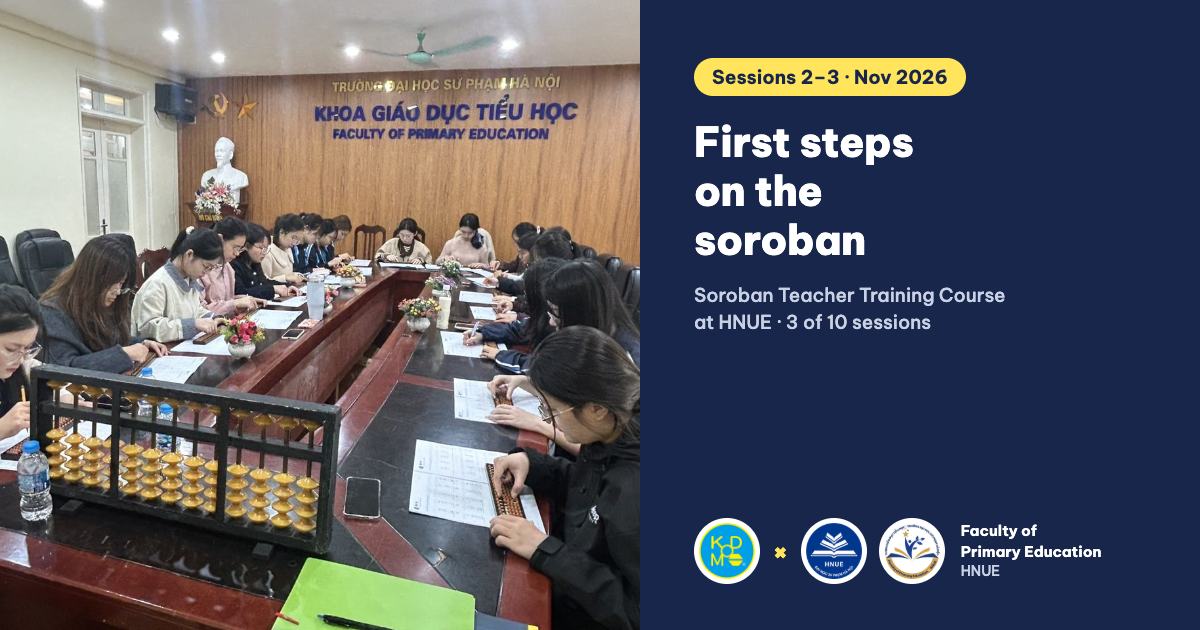
On 14 November 2026, the Soroban Teacher Training Course for students of the Faculty of Primary Education at Hanoi National University of Education (HNUE) completed the third of its 10 sessions. After Session 1 on manners and posture, the students started learning the soroban with Mr. Eiichi Komine in Session 2.

Session 2 (7 Nov): holding a soroban for the first time
From Session 2, the class is taught by Mr. Eiichi Komine, lead instructor of the course and Academic Advisor of Kodomo Soroban Center, with interpretation by Ms. Nguyen Minh Ha, Director of Kodomo Soroban Center. The session still began and ended with the Japanese-style greeting the students practised in Session 1.
Mr. Komine opened with a few words about himself, the history of the soroban, and Japan. When he asked what the students knew about Japan, the answers came at once: anime, sushi, Mount Fuji…
Then he spoke to the students as future primary school teachers: today’s exercises are very easy, and you could do them without a soroban. Teaching them to a child, however, is a different matter. Some of you will get it right away and some will not yet – and children are the same. He asked the students to remember today’s feeling of “I can’t do it yet”, so that they will understand their own pupils later.
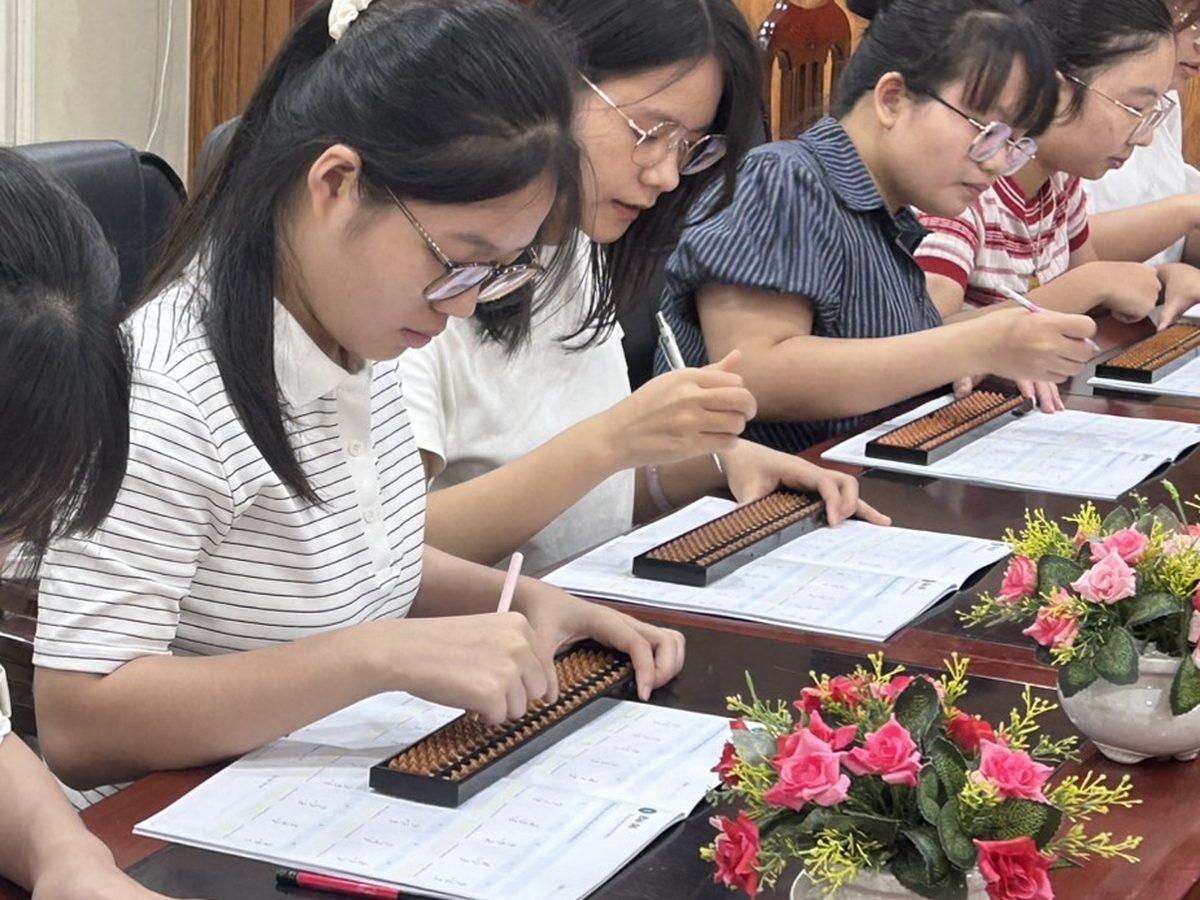
What the students learned in Session 2
- Unit dots and the ones place
The beam of the soroban has unit dots. Choose one dot as the ones place and start from there.
- Left hand holds the soroban, right hand holds the pencil
The left hand keeps the soroban from sliding. The right hand keeps the pencil even while moving the beads, so the answer can be written the moment the calculation is done.
- Numbers 1 to 9
Four lower beads (worth 1 each) and one upper bead (worth 5). Six is 5 and 1: the two beads are moved at the same time.
- First additions and subtractions
From two numbers to three, with both adding and subtracting – worked directly in the Vietnamese textbook.
According to Mr. Komine, in the first sessions a right or wrong answer is not yet the most important thing. What matters more: is the right hand holding the pencil, and is the left hand holding the soroban? A habit that is not corrected in the first sessions is very hard to correct later – even more so with young children.
Mental arithmetic by Japan’s champions
During the session, Mr. Komine showed videos of Japanese champions calculating very large numbers in their heads, without a soroban. He stressed that they are not geniuses – it is the result of practising every day for many years.
He also explained why the pencil stays in the hand even while moving the beads: every technique taught that day – keeping the pencil in hand, how to use the fingers – exists to finish the calculation faster, even by a single second.
Session 3 (14 Nov): keeping good posture while practising
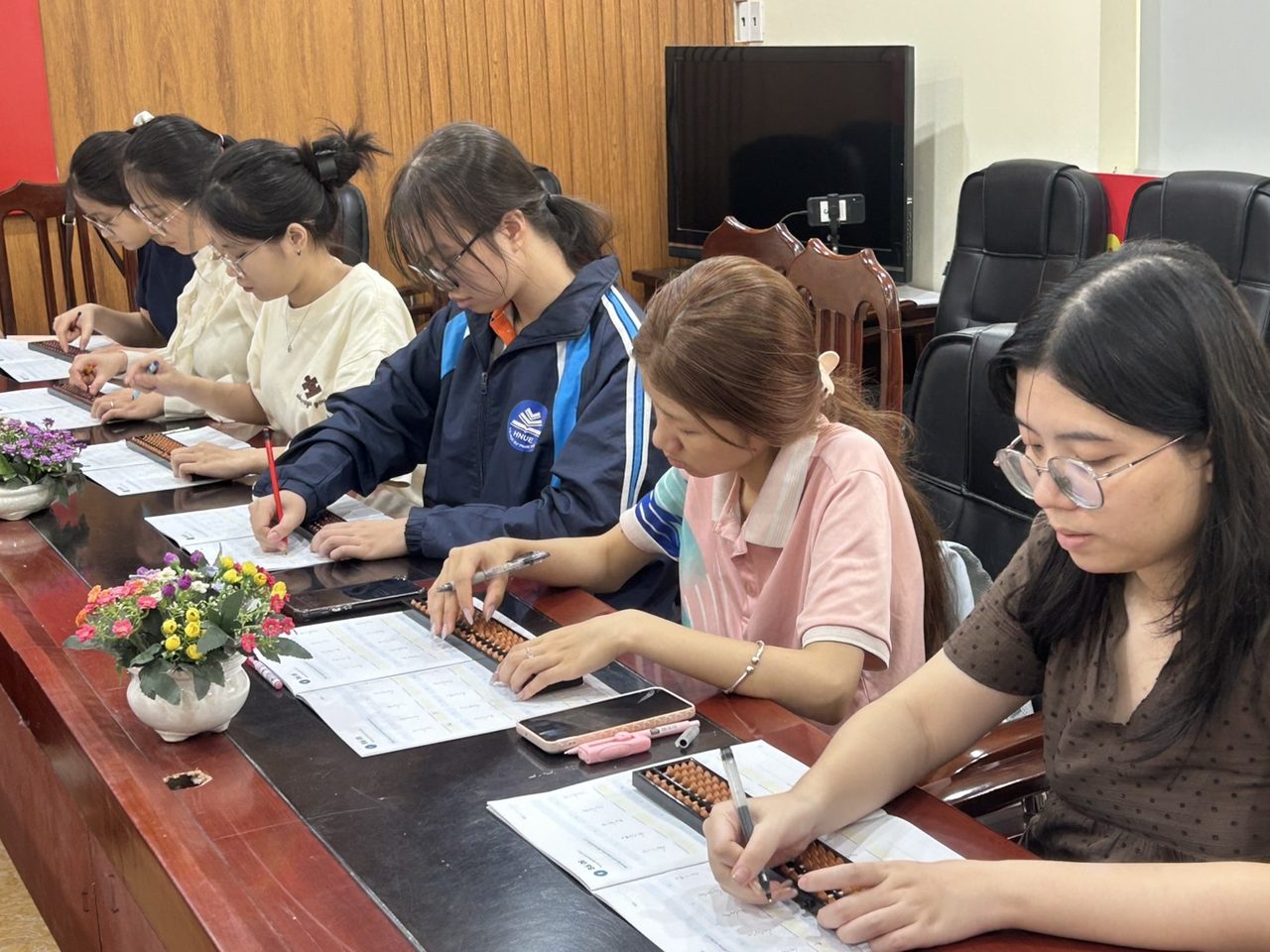
In Session 3, the students continued practising addition and subtraction on the soroban with the first textbook. According to Mr. Komine and Ms. Minh Ha, the whole class is practising with very good posture.
In the photos, the students hold the soroban with the left hand while the right hand holds the pencil and moves the beads – just as Mr. Komine showed them in Session 2. Sitting posture is also one of the “Kata” from Session 1, now kept during practice.

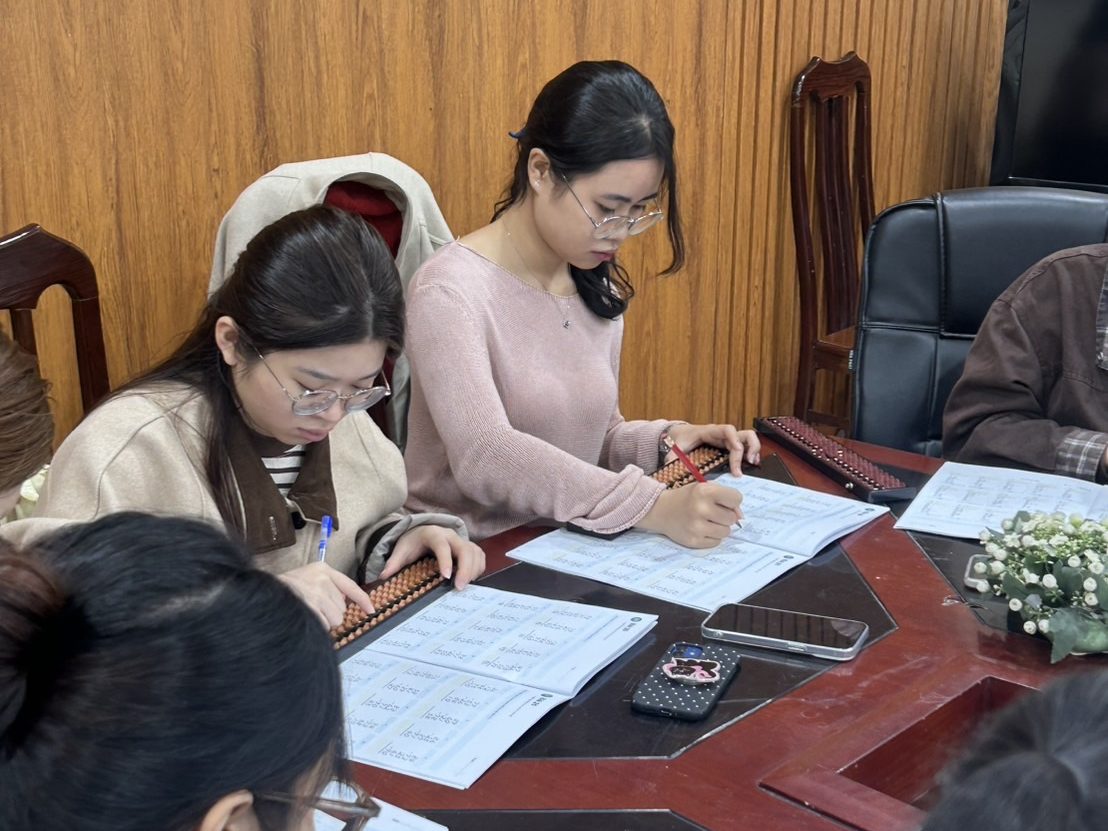
Mr. Komine has set homework. From the next session, the whole class moves on to the second textbook: addition and subtraction using 5 – with the “friends of 5”, the pairs of numbers that make 5.
Session 1: manners, posture, tidiness. Session 2: getting to know the soroban and the numbers 1 to 9. Session 3: more practice in adding and subtracting. Next: addition and subtraction using 5.
The sessions ahead
The course has 10 sessions. After addition and subtraction using 5, the students will go on learning soroban calculation, mental arithmetic and teaching methods suited to Vietnamese children. In the last session, each student will give a 15-minute trial lesson.
The course is part of Morita Group’s project selected for support by Japan’s Ministry of Education, Culture, Sports, Science and Technology (MEXT) under the EDU-Port Nippon programme 2026.
Kodomo Soroban Center sincerely thanks the Faculty of Primary Education, Hanoi National University of Education, for supporting the course, and thanks the students for practising so diligently in every session.
See also: Session 1: Building a Japanese-style classroom · Memorandum of Understanding signed with Hanoi National University of Education.
Try a free soroban lesson
Classes of 3–5 children at Vinhomes Gardenia (Hanoi), 60 minutes each, taught exactly as in Japan. Phone · Zalo 096.802.8484.
Written by the teaching team of Kodomo Soroban Center, following the method and textbooks of Kodomo School (Japan, teaching soroban since 1976). The center is licensed by the Hanoi Department of Education and Training, and our project is a 2026 EDU-Port Nippon supported project of Japan’s Ministry of Education (MEXT).
About usEDU-Port NipponEducation licenseRelated articles
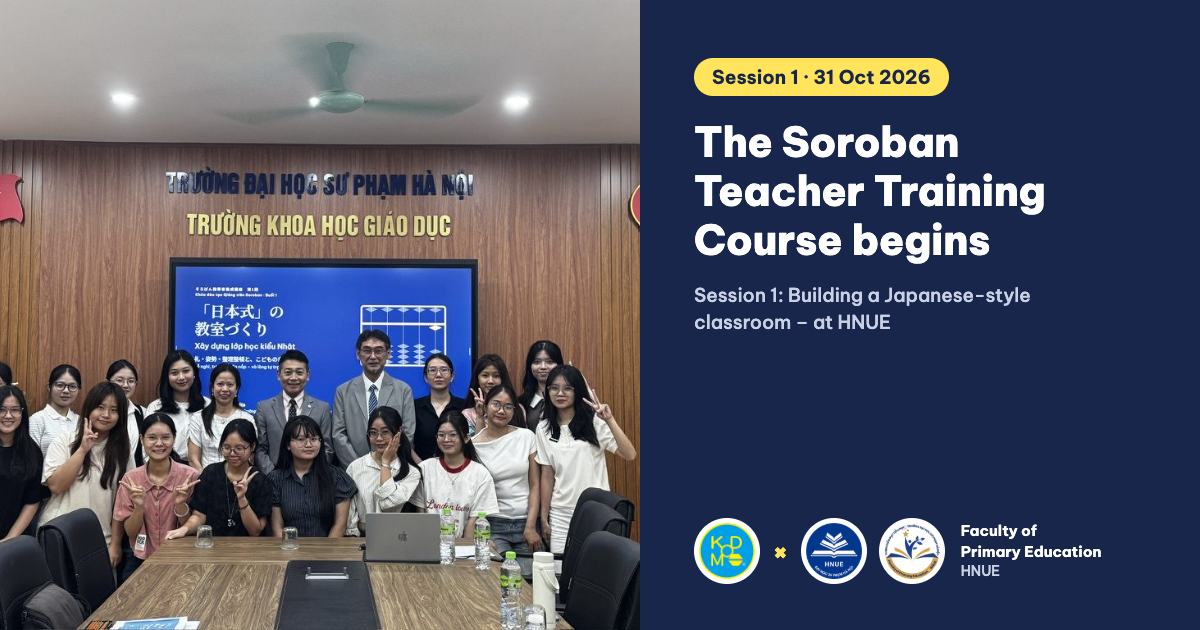
The Soroban Teacher Training Course Begins at Hanoi National University of Education – Session 1: Building a Japanese-Style Classroom
On 31 Oct 2026, the Soroban Teacher Training Course for students of the Faculty of Primary Education, HNUE, began. Session 1: building…

Memorandum of Understanding Signed with Hanoi National University of Education
On 16 Oct 2026, Kodomo Soroban Center (Morita Group Vietnam) signed an MOU with Hanoi National University of Education: a free 10-session…
Japanese Alphabet for Kids: Hiragana Chart, Reading, Stroke Order and Free Printable PDF Worksheets
The 46 hiragana with romaji, dakuten and combined sounds, correct stroke order and 10 greetings – plus free printable hiragana PDF worksheets…