Mental math tricks for kids: addition, subtraction, multiplication – and why soroban lasts longer than tricks
To help their children do mental math faster, many parents look for tricks: to add 9, add 10 and take away 1; to multiply by 5, multiply by 10 and halve it… Tricks are genuinely useful, and kids often love them because they feel “as fast as magic”. We are Japanese, teach soroban to children in Hanoi, and the first thing we want parents to know is this: tricks work best once a child has “number sense” – an understanding of groups of 10, and of tens and ones.
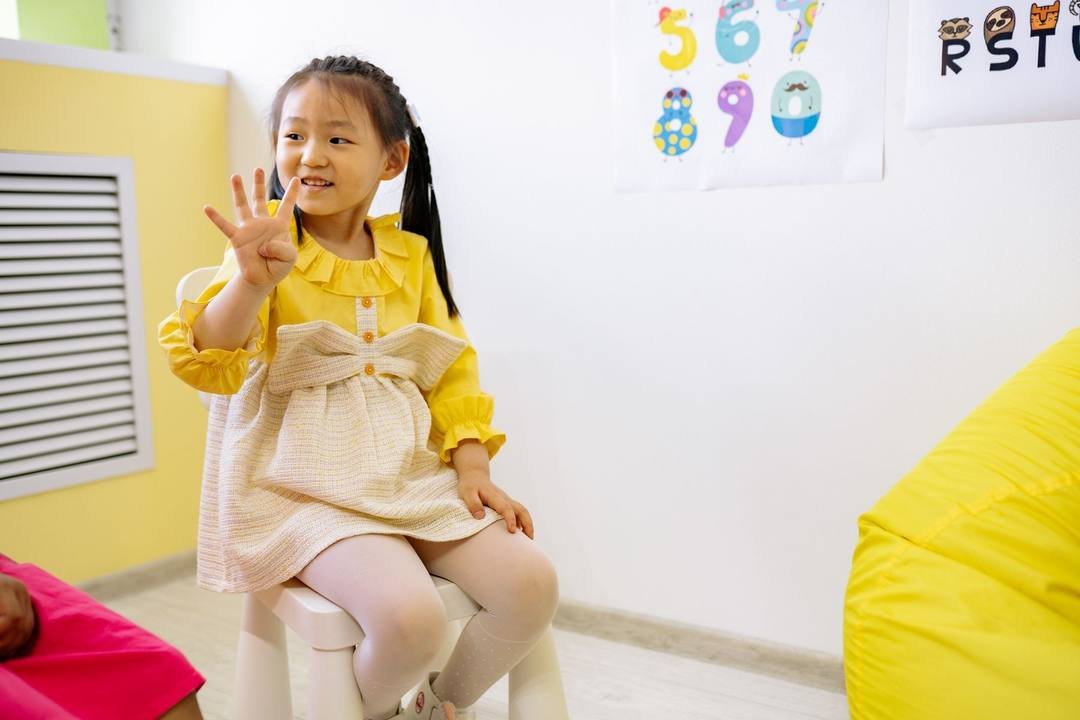
Mental math tricks speed up specific kinds of problems, once your child understands groups of 10 and tens and ones.
- Addition: make 10, round up then take away, add by place value
- Subtraction: think in addition, or subtract a round number then give back
- Multiplication: ×5 is ×10 then halve; ×9 is ×10 then take away one group
- One trick a week, 5–10 minutes a day
- Say it out loud, then write it, and only then do it in your head
- Soroban gives one way to calculate any number – a foundation that makes tricks last
Before learning tricks: what foundation does your child need?
Most mental math tricks do the same job: they turn a hard problem into one with round numbers. So your child first needs three things:
- Friends of 10: hear 7 and think of 3 right away; hear 4 and think of 6.
- Splitting numbers: know that 5 is 2 and 3, and 8 is 5 and 3.
- Tens and ones: look at 47 and see 4 tens and 7 ones.
If your child still struggles with these, build the foundation first with How to teach a grade 1 child fast mental math. Once the foundation is solid, tricks come naturally, because your child understands why they work.
Which tricks for which grade? In Vietnamese primary schools, addition and subtraction are the focus of grades 1–2. Under Vietnam’s 2018 general education curriculum, children start multiplication in grade 2 with the 2 and 5 times tables, and learn the rest of the tables in grade 3. You can choose tricks along these lines:
- Grades 1–2Addition and subtraction tricks
Making 10, adding by place value, subtracting by adding. Start with small numbers, then move on to 2-digit numbers.
- Grades 2–3Multiplication tricks
×5, ×9, ×4 – once your child understands multiplication as putting together equal groups.
- Older kids“Advanced” tricks
Multiplying a 2-digit number by 11, squaring numbers that end in 5. For kids who already know their times tables, to enjoy like a magic trick.
Mental math tricks for addition
Start with small numbers. Each trick below comes with an example to try together – your child says each step out loud, and you just ask questions.
8 + 5 = 8 + 2 + 3 = 10 + 3 = 13. 8 needs 2 to make 10, so split 5 into 2 and 3. Use it for sums that cross 10.
47 + 38 = 47 + 40 − 2 = 87 − 2 = 85. 38 is close to 40: add 40 because it’s easy, then take away the extra 2.
34 + 25 = (30 + 20) + (4 + 5) = 50 + 9 = 59. Tens with tens, ones with ones, then put them together.
6 + 7 = 6 + 6 + 1 = 12 + 1 = 13. Kids usually learn doubles like 6 + 6 = 12 very quickly; then just add 1.
In fact, “round up, then take away” is exactly what a child’s hand does on the soroban: to add 8 when the ones rod doesn’t have enough beads left to move, the child adds 1 ten and takes away 2 – because 8 and 2 are “friends of 10”. Every addition trick turns a hard sum into round numbers or into a fact your child already knows.
Mental math tricks for subtraction
Many kids find subtraction harder than addition. These three tricks help them avoid the hard part:
- Think in addition. 13 − 8: “What do I add to 8 to get 13?”. 8 plus 2 is 10, plus 3 more is 13 – so the answer is 2 + 3 = 5.
- Subtract a round number, then give back. 63 − 28 = 63 − 30 + 2 = 33 + 2 = 35. Taking away 30 takes away 2 too many, so add the 2 back.
- Subtract from 10. 15 − 7 = (10 − 7) + 5 = 3 + 5 = 8. Take 7 from the ten, then put what’s left together with the 5 ones.
The second trick is where kids often mix up the signs: if you took away too much, you add it back – you don’t take away more. Have your child say “I took away 2 too many, so I give 2 back” out loud a few times before doing it in their head.
Subtraction is also easy to practice during chores. While tidying up toys, ask: “There are 14 blocks, and you’ve put away 9. How many are left?”. Your child thinks: 9 plus 1 is 10, plus 4 is 14 – so 5 blocks are left.
Mental math tricks for multiplication
Teach multiplication tricks only once your child understands multiplication as putting together equal groups and knows a few easy tables. If your child is learning the times tables, see How to learn the times tables fast.
| Trick | Example | How to think |
|---|---|---|
| ×5 | 16 × 5 = 160 ÷ 2 = 80 | Multiply by 10 (add a 0), then halve it – because 5 is half of 10. |
| ×9 | 7 × 9 = 70 − 7 = 63 | Multiply by 10, then take away one group: 7 × 10 = 70, minus one 7. |
| ×4 | 13 × 4: 13 × 2 = 26, 26 × 2 = 52 | Double it, then double it again – because 4 = 2 × 2. |
| ×11 (2-digit numbers) | 23 × 11 = 253 | Put 2 and 3 on the outside, and their sum 2 + 3 = 5 in the middle. |
| ×11, when the sum is 10 or more | 57 × 11 = 627 | 5 + 7 = 12: write 2 in the middle and carry 1 to the first digit: 5 + 1 = 6. |
| Bonus: squaring numbers that end in 5 | 35 × 35 = 1225 | Multiply the tens digit by the next number up: 3 × 4 = 12, then write 25 after it. |
When your child learns a new trick, have them check it another way at first – for example 16 × 5 by adding 16 + 16 + 16 + 16 + 16 = 80. When kids see for themselves that the trick gives the same answer, they trust it and remember it longer.
How to practice mental math tricks so they stick
Knowing a trick isn’t enough – your child needs to use it without having to think. Here is the practice routine we often suggest to parents:
- 5–10 minutes a day
Short but regular. Stop while your child still wants to keep going, so they look forward to coming back the next day.
- One trick per week
Spend the whole week on one trick, with lots of different numbers. Move on to a new trick the next week, and review old ones now and then.
- Say it, write it, then do it in your head
Early in the week your child says each step out loud (“8 needs 2 to make 10…”), mid-week writes the steps on paper, and by the end of the week does it entirely in their head.
- Practice with worksheets and online tools
Print our free worksheets so your child can do a small part each day, or try the online mental math practice tool with small numbers.
Three things to avoid when teaching tricks:
- Making your child memorize formulas without understanding why. Tricks learned by rote are easily forgotten, and your child can’t check their own mistakes.
- Timing them from the start. Right first, fast later. Time pressure easily sends kids back to counting on fingers or guessing.
- Teaching many tricks at once. Your child will mix them up. One trick that feels natural is worth more than five they “sort of know”.
Only when your child can use a trick without thinking does it truly become theirs. When that happens, praise how they thought, not just how fast they were.
Mental math tricks and soroban: how are they different, and how do they work together?
Mental math tricks and Japanese mental math with the soroban (anzan) are not opposites. They simply work differently:
Soroban mental math
- One method for every number: picture the abacus and “move” the beads in your head
- No need to choose a trick – every problem follows the same steps
- Can go on to numbers with many digits
- Needs time to practice regularly on a real abacus first
Mental math tricks
- Each trick is for one type of problem (×5, ×9, ×11…)
- Very fast when the problem fits
- Your child must spot the type and choose a trick – this takes a little time at first
- Can be learned in a few days, no tools needed
The two complement each other. Children who learn soroban get used to “friends of 10” and to tens and ones through moving beads hundreds of times, so when they meet a trick, they easily understand why it works. Tricks are a great tool; a foundation of number sense and the abacus in the head helps children use them faster and more reliably.
To learn more about how Japanese children do mental math with an abacus in their head, read What is Japanese mental math (anzan)?.
At Kodomo Soroban Center (Vinhomes Gardenia, Hanoi), each class has 3–5 children, and each 60-minute lesson includes grid calculation, soroban, mental math and Flash Anzan. At home, students use their member code to enter the Soroban Practice Room (in Vietnamese) and practice Flash Anzan and the times tables.
See how a lesson works and the center’s class schedule. The trial lesson is free – sign up on our Contact page or call or message us on Zalo at 096.802.8484.
Frequently asked questions
Should I teach mental math tricks to my grade 1 child?
Yes, simple ones like making 10 (8 + 5 = 8 + 2 + 3 = 13) or adding by place value, once your child knows the “friends of 10” pairs. Teach one trick at a time, have your child say the steps out loud, and don’t time them at first. Save multiplication tricks until your child learns multiplication in grades 2–3.
Is it bad if my child does mental math on their fingers?
Not at all, especially when they are just starting addition and subtraction. Fingers help children understand quantities, and one hand is a ready-made group of 5. Once your child knows the “friends of 10” pairs and can split numbers, gradually move to seeing numbers in groups instead of banning fingers outright.
What is the trick for multiplying by 11?
For a 2-digit number, put its two digits on the outside and their sum in the middle: for 23 × 11, 2 + 3 = 5, so the answer is 253. If the sum is 10 or more, write the ones digit of the sum in the middle and carry 1 to the first digit: for 57 × 11, 5 + 7 = 12, so the answer is 627. This trick only works for 2-digit numbers.
How can my child do mental math fast without tricks?
Build number sense: know the “friends of 10” pairs, split and combine numbers, understand tens and ones, and practice 5–10 minutes every day. Learning soroban is one way: children calculate with a picture of the abacus in their head, using the same method for every number.
How is Japanese mental math different from mental math tricks?
Mental math tricks are special methods for particular types of problems, such as ×5 or ×11. Japanese mental math (anzan) means picturing a soroban in your head and “moving” the beads, so it works for any addition or subtraction, even with many digits. In our experience, children who are used to the abacus often pick up tricks very quickly, because they already “see” groups of 10 in the beads.
Try a free soroban lesson
Classes of 3–5 children at Vinhomes Gardenia (Hanoi), 60 minutes each, taught exactly as in Japan. Phone · Zalo 096.802.8484.

Written by the teaching team of Kodomo Soroban Center, following the method and textbooks of Kodomo School (Japan, teaching soroban since 1976). The center is licensed by the Hanoi Department of Education and Training, and our project is a 2026 EDU-Port Nippon supported project of Japan’s Ministry of Education (MEXT).
About usEDU-Port NipponEducation licenseRelated articles
Shichida, Montessori, Kumon, Soroban: how do these 4 approaches to education differ?
What are the Shichida and Montessori methods, and how do they differ from Kumon and soroban? Comparing 4 early-education approaches for ages…
My child is “lazy” about studying – what should I do? Try a Japanese teacher’s approach instead of scolding
Child lazy about studying? The 6 real reasons behind “lazy”, 5 ways Japanese teachers help children sit down on their own, how…
What is Kumon? How it works, its strengths and what to know before you sign up
What is Kumon – a company, a school or a subject? The Japanese worksheet-based learning method: how it works, its strengths, which…