 Thị trấn WakumaStudent login
10 math games for kids aged 3–5 at home – no need to buy toys
“My child is only 3 – should I start teaching math yet?” Many parents ask us this. We are Japanese and teach soroban to children from age 5 in Hanoi. Our answer: at ages 3–5, math means short games with real objects, said out loud – no workbooks needed, and no expensive toys either.
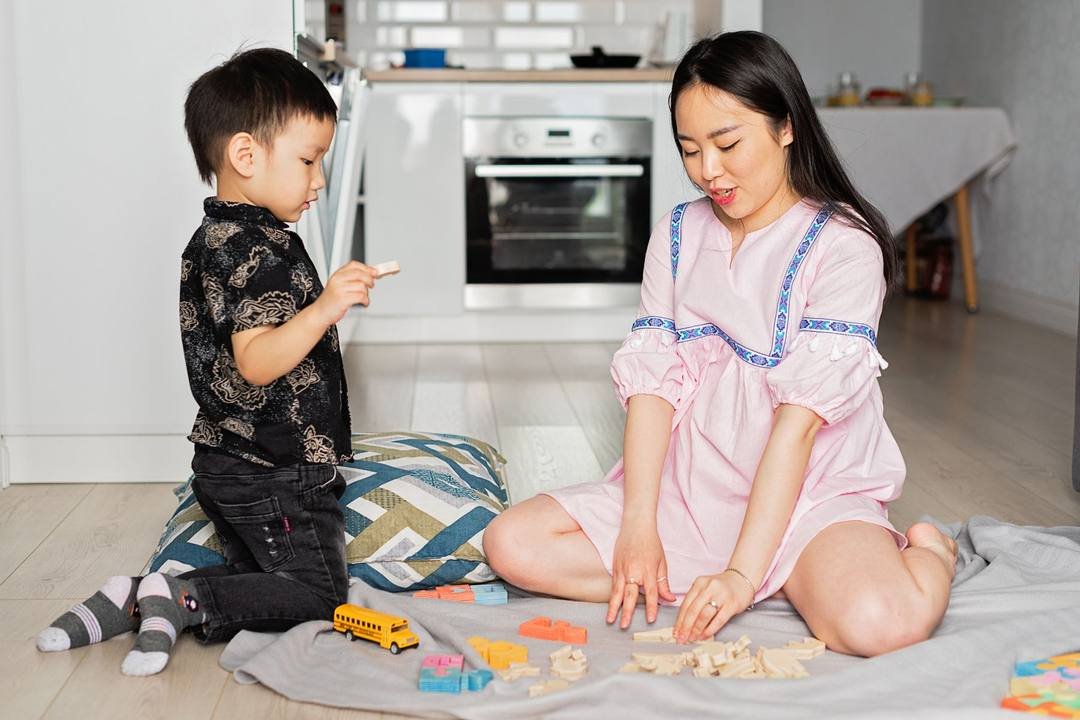
Children aged 3–5 learn math best through short games with things around the house.
- 5–10 minutes at a time; stop while your child is still having fun
- Use real objects; count and say numbers out loud
- No writing, and don’t turn games into tests
- All you need is at home: a bowl, spoons, blocks, a die, tape
- Choose games that suit your child, then make them a little harder
What is math for ages 3–5? 3 promises before you play
For children aged 3–5, “math” isn’t addition on paper yet. It’s counting things, comparing more and fewer, sorting by color, spotting patterns, measuring long and short – things that happen at home every day.
Before you pick a game, keep these 3 promises:
Stop while your child still wants to play, so they look forward to next time.
Your child touches, moves and counts each item out loud.
Don’t make your child write numbers or fire “How many?” questions at them. A game should stay a game.
A 5-minute game your child wants to keep playing is worth more than a long session they are made to sit through.
The first five games: order, sorting, patterns and comparing
The age next to each game is a suggested age to start; older children can still play – just make it a little harder.
1. Number hopscotch – from age 3
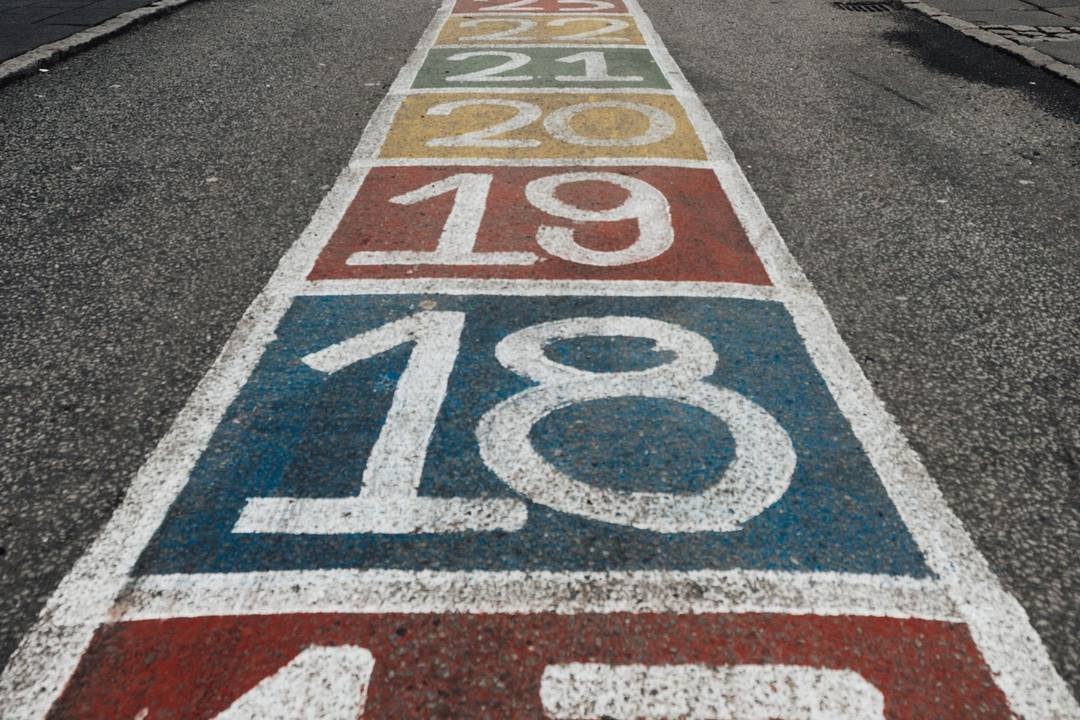
You need: masking tape or chalk. Your child learns: the order of numbers, counting forward and backward.
Tape a row of squares and write a number in each one. Your child hops along, saying the number they land on out loud. Once they’re used to it, add squares, hop backward while counting down, or call out “Jump to square 4!”.
2. Sorting toys – from age 3
You need: a basket of mixed toys: blocks, cars, stuffed animals. Your child learns: sorting and putting things in order.
At cleanup time, invite your child to sort by color, by type, then by size. Ask “Why did you put this one here?” – there are many right ways. Older children can try lining things up from smallest to biggest.
3. Making patterns – from age 3
You need: clothespins in two colors, or blocks. Your child learns: spotting a pattern and guessing what comes next.
Clip “red, blue, red, blue…” onto the edge of a box and ask: “What color comes next?”. Then switch to “red, red, blue”, and let your child make a pattern for you to guess.
4. Which group has more? – from age 3
You need: two groups of things, such as toy cars and blocks. Your child learns: comparing more, fewer and the same.
Don’t count right away. Have your child make pairs: each car next to one block. The group with some left over has more. Only then count: “5 cars, 4 blocks – 1 car left over”.
5. Hide it under a bowl – from age 5
You need: a bowl and 5 beans. Your child learns: splitting and combining numbers (number bonds), the base of addition and subtraction.
Count 5 beans together. Your child closes their eyes while you cover a few beans with the bowl. They open their eyes and see 3 beans outside: “How many are under the bowl?”. They answer, then lift the bowl to check. Once 5 feels easy, slowly go up to 10.
That is exactly the “5 is 3 and 2” your child will meet in grade 1. The bowl game is a small bridge from counting to calculating. See also our article Number bonds in grade 1.
The next five games: seeing quickly, measuring, scooping and finding numbers around you
The next five take numbers out of the toy basket: into the kitchen, down the hallway, out on the street.
6. Dice dots – from age 4
You need: a die, or homemade cards with dots. Your child learns: seeing a small group and knowing at once how many.
Roll the die and your child says the number of dots. Counting dot by dot at first is fine; after many rolls, they start to “recognize the face” of 4 or 5 dots. When they’re quick, use two dice: “3 here, 2 there – how many altogether?”.
7. Measuring with hands and feet – from age 4
You need: the whole family’s hands and feet. Your child learns: measuring length, comparing long and short.
“How many hand spans long is the table?” Your child lays hand after hand end to end and counts. Then you measure the same table – fewer hand spans! It’s a good moment to talk about why everyone needs to use the same ruler.
8. Little kitchen helper – from age 4
You need: spoons, cups, rice or water. Your child learns: measuring, counting and comparing amounts.
Give your child the measuring job: “3 spoons of sugar”, “2 cups of rice” – counting each spoonful out loud. Once they’re used to it, guess first: “How many spoons of water will fill this small cup?”, then measure to check. Choose jobs with no knives and away from the hot stove.
Small kitchen jobs are also a habit in many Japanese families – see Japanese-style parenting for ages 3–6.
9. Clap the number – from age 3
You need: nothing at all. Your child learns: each number means exactly that many times – counting with the whole body.
You say “4!” and your child claps 4 times, counting along. Switch to jumps or stomps. Then swap roles: you clap, and your child closes their eyes, listens and says “How many?”.
10. Number hunt – from age 4
You need: sharp eyes. Your child learns: reading numerals and noticing numbers all around.
When you’re out, look for numbers on house numbers, license plates and elevator buttons: “Today let’s find the number 7!”. Once your child reads numerals confidently, try finding them in order from 1 to 10. Numbers aren’t only in books – your child meets them everywhere.
Age 3, 4 or 5: which game should you start with?
The table below is only a suggestion for which game to start with. Every child develops at their own pace – look at your child, not at the age on paper.
| Age | Start with | Once your child is used to it |
|---|---|---|
| 3 | Clap the number, number hopscotch (few squares), sorting toys, which group has more? | Two-color patterns, more squares |
| 4 | Dice dots, measuring with hands and feet, little kitchen helper, number hunt | Three-color patterns, hopping backward while counting down |
| 5 | Hide it under a bowl with 5 beans, finding numbers in order from 1 to 10 | The bowl game with 6–10 beans, two dice |
Pick your child’s 2–3 favorite games and rotate them through the week. Your child wants to play a familiar game again? Go ahead – just add a little challenge each time.
Things to avoid when playing math games with your child
A game can easily turn into “study time” without parents noticing. Try to avoid:
- Turning the game into a test: nonstop questions, marking right and wrong
- Correcting mistakes right away, or giving the answer
- Comparing your child with siblings or friends
- Playing too long, until your child is bored or cranky
- Making your child write numbers when they just want to play
When your child makes a mistake, check again together with the objects: “Shall we count again together?”. Your child needs to feel that mistakes are normal when playing with numbers.
From games to the abacus: when your child turns 5
Seeing at a glance how many, splitting 5 into 3 and 2 – this is also how children who learn soroban see numbers. On the abacus, the upper bead is the “5 bead”, so children get used to seeing numbers in groups of 5 and 10. Want to give your child a first taste? Try the online soroban together, as a game.
Kodomo Soroban Center has a kindergarten class for children from age 5 at our center in Vinhomes Gardenia. Each class has 3–5 children; each 60-minute lesson is split into 7 parts, the longest about 20 minutes. Our teaching follows Kodomo School, a Japanese school network since 1976.
See also What should a 5-year-old learn?. The trial lesson is free – sign up on our contact page or call or message us on Zalo at 096.802.8484.
Looking for more games for a child about to start grade 1? Getting your child ready for grade 1 math has more 5-minute games and a free checklist.
Frequently asked questions
Can a 3-year-old learn math?
Yes, if “learning” means playing. With a 3-year-old, start with games that use the body and objects: clap the number, number hopscotch, sorting toys by color. There’s no need yet to write numbers or do addition on paper.
How long should we play each day?
5–10 minutes at a time is enough – stop while your child is still having fun. A little every day is better than one long session on the weekend. You can also fit games into daily life: tidying toys, cooking, the walk home from school.
What if my child doesn’t want to play?
Don’t force it. Choose active games such as number hopscotch or clap the number, or link the game to something your child loves: cars, dolls, food. Start playing on your own and have fun – many children will come over by themselves. Taking a few days off and trying again is fine too.
Do I need to buy expensive educational toys?
No. All 10 games in this article use things you already have: a bowl, spoons, cups, clothespins, blocks, tape and a die. What matters most is that you sit and play together and say the numbers out loud.
When can my child start learning soroban?
At Kodomo Soroban Center, our kindergarten class takes children from age 5. Before that, the games in this article are good preparation: counting objects, seeing at a glance how many, splitting 5 into two parts. A free trial lesson helps you and your child see whether the class is a good fit.
Try a free soroban lesson
Classes of 3–5 children at Vinhomes Gardenia (Hanoi), 60 minutes each, taught exactly as in Japan. Phone · Zalo 096.802.8484.

Written by the teaching team of Kodomo Soroban Center, following the method and textbooks of Kodomo School (Japan, teaching soroban since 1976). The center is licensed by the Hanoi Department of Education and Training, and our project is a 2026 EDU-Port Nippon supported project of Japan’s Ministry of Education (MEXT).
About usEDU-Port NipponEducation licenseRelated articles
Word problems in grades 1 and 2: 4 steps to help your child understand and solve them – with a free worksheet
Why grade 1 and 2 word problems are hard, 4 steps (read, underline, draw, solve), the “more than” trap, how to draw…
Splitting and combining numbers in grade 1: how to teach number bonds up to 10 – with a free worksheet
How to teach grade 1 number bonds – splitting and combining numbers up to 10: 5 steps from objects to mental math,…
Japanese-style parenting for ages 3–6: 10 small habits many Japanese families keep every day
Japanese-style parenting for ages 3–6 at home: greetings, meals, small chores, waiting while kids try, praise and scolding, early bedtime, picture books…