Shichida, Montessori, Kumon, Soroban: how do these 4 approaches to education differ?
When children are small, parents hear a lot of names: Shichida, Montessori, Kumon, soroban… and it’s hard to know where to begin. We are Japanese and teach soroban to children from age 5 in Hanoi, so in this article we describe each approach the way it describes itself. The short answer: no approach is best for every child – choose by your child’s age and what your family wants to nurture.
The four approaches answer four different questions, so they can’t be ranked.
- Montessori (Italy): children choose their own activities; the teacher observes
- Shichida (Japan): flash cards and recitation; parents learn alongside their child
- Kumon (Japan): self-study worksheets every day, in small steps
- Soroban (Japan): moving beads on an abacus, then mental math with an abacus in the head
- Choose by your child’s age and personality and your family’s time
- Always try a trial lesson before deciding
4 approaches to early education: each asks a different question
These four names differ first of all in the question each approach is trying to answer:
“How can my child learn to do things by themselves?” Children choose their own work in a prepared classroom. There are classes for ages 0–3 and 3–6.
“How can we draw out a child’s abilities very early?” Flash cards, recitation, parents join the class. From 6 months old.
“How can my child study on their own every day?” Worksheets that start at the just-right level and get harder little by little. From preschool age.
“How can my child understand numbers and do mental math?” Moving beads on an abacus, then picturing the abacus in the head. Usually from age 5.
If you are comparing math classes, see What is Japanese “thinking math”? and Soroban or Finger Math?. This article is broader: these are four different ways of thinking about raising young children, not just about math.
What is the Montessori method?
Maria Montessori was Italian; in 1896 she became one of the first women doctors in Italy. On January 6, 1907, she opened the first “Children’s House” (Casa dei Bambini) in San Lorenzo, a poor working-class district of Rome.
According to the Association Montessori Internationale (AMI), she observed that children can teach themselves when they are in the right environment. The main ideas:
- A prepared environment: low shelves, child-sized things, a place for everything.
- Children choose their own work: the teacher observes and helps only when needed.
- Mixed-age classes: older and younger children learn together.
- Sensitive periods: stages when a child is strongly drawn to one thing – language, movement, order – and concentrates on it deeply.
In a Montessori class, adults wait for children to do things themselves instead of doing it for them. This is very close to how Japanese parents raise independent children.
Using the Montessori method at home
The American Montessori Society (AMS) suggests: keep only a few toys, on low shelves at your child’s eye level; let your child use real, child-sized things – kitchen utensils, a cloth, a small broom – instead of toy versions; show the task slowly with few words, then let your child do it.
When choosing a school with “Montessori” in its name, visit a class: do children get to choose their own work, and does the teacher wait patiently?
What is the Shichida method?
The Shichida method (七田式) was developed by Makoto Shichida (1929–2009) from Shimane Prefecture, Japan. According to Shichida, he researched early childhood education from 1958, and the Shichida company was founded in 1978.
Shichida’s motto is “acknowledge, praise and love your child as you raise them.” Its infant course is for children from 6 months to 6 years old, 50 minutes per lesson, and parents join the lesson with their child.
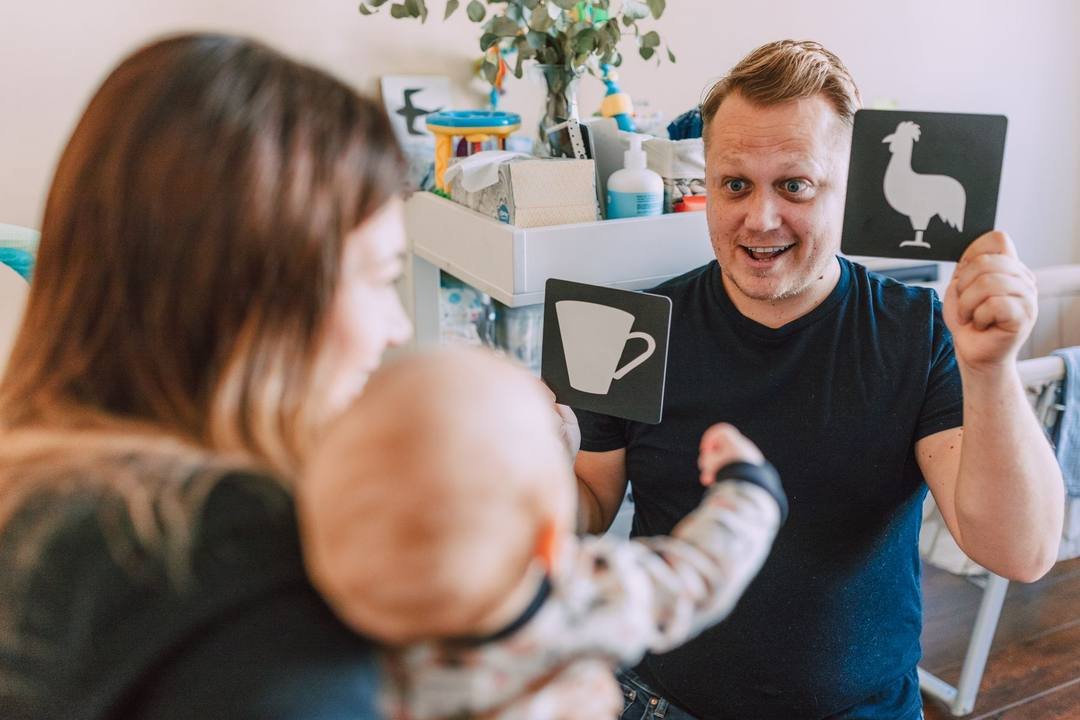
Typical activities:
- Flash cards: flipping through many picture or word cards very quickly.
- Dots: cards with dots, to get a feel for quantities.
- Recitation: listening, reading and repeating many times.
- Imagination games: picturing a scene vividly in the mind.
According to Shichida, the bond between parent and child is the key, and parents are shown how to continue the activities at home.
Disadvantages of the Shichida method: what should parents consider?
Shichida says its method helps develop a child’s ‘right brain’. However, neuroscientists say the two hemispheres of the brain always work together, and there is currently no evidence that you can ‘train only the right brain’.
Also, the method needs parents to take part both in class and at home – an advantage if your family has the time, harder if you are busy. And at this age, free play, movement and enough sleep matter just as much as early learning.
Kumon and soroban: two Japanese ways of learning math
Kumon: self-study with worksheets, in small steps
Kumon began in 1954, when Toru Kumon, a high school math teacher, made worksheets for his son, then in second grade. In 1958, the office of the Osaka Institute of Mathematics – the foundation of today’s Kumon – was established.
According to Kumon, each child starts at a just-right level and does worksheets every day, each a little harder than the last. Children can start from preschool age (around 3); in Vietnam, Kumon teaches math and English. See What is Kumon? and Soroban or Kumon?.
Soroban: from the abacus in your hands to the abacus in your head
We teach soroban, so this is the part we know best. Soroban is the Japanese abacus: children see numbers as beads, move the beads with their fingers, and gradually picture the abacus in their head to do mental math (anzan). Children who learn the “abacus in the head” calculate faster and more accurately (Stigler, 1984).
Soroban also has “Flash Anzan”: numbers flash quickly on a screen and children add them up in their head. It sounds like Shichida’s flash cards, but the goal is calculation, not memorizing pictures.
At our center, each class has 3–5 children, and the 60-minute lesson is split into 7 short parts (see how a lesson works). Soroban doesn’t aim to teach language or self-care skills the way Montessori does – soroban focuses on numbers, concentration and good study habits.
Comparison table of the 4 approaches
A summary based on how each approach describes itself; ages may vary from place to place.
| Montessori | Shichida | Kumon | Soroban | |
|---|---|---|---|---|
| Starting age | Classes for ages 0–3 and 3–6 | 6 months | Around 3 | Usually 5 |
| What it nurtures | Independence, concentration | According to Shichida: memory, vocabulary, imagination | Self-study habits, accurate calculation | Number sense, mental math, concentration |
| How children learn | Children choose their work; the teacher observes | Flash cards, recitation, imagination | Worksheets that get harder step by step | Abacus → abacus in the head |
| Where | Mainly at school | In class + at home | At the center + daily worksheets at home | In class + short practice at home |
| Parents | Let children do it themselves, wait patiently | Join the class with their child | Keep up the daily worksheet habit | Remind and encourage practice |
Common misconceptions about early education
“The earlier children start, the more likely they are to become geniuses.”
Every child grows at their own pace. From 0 to 6, play, movement, enough sleep and talking with adults are the foundation; any approach is only one part of that.
“One approach will develop everything.”
Each has its own strength: Montessori in independence, Shichida in the parent–child bond, Kumon in self-study habits, soroban in numbers.
“Doing several approaches at once makes children progress faster.”
Every approach needs steady practice. Add them up and children easily get overloaded and lose interest.
Which approach should you choose for your child?
- How old is your child? Each approach has classes for different ages – see the table above.
- What does your child enjoy? Exploring and doing things alone; sitting quietly with paper and pencil; touching and counting to the rhythm of a class; or looking at pictures and listening to stories with a parent?
- How much time do you have? Shichida needs parents in class; Kumon needs daily worksheets; soroban needs regular classes and short practice at home.
- Has your child tried a trial lesson? Afterwards, did they have fun, and do they want to go back?
We teach soroban, but if another approach suits your child better, that is a good answer too. The best approach is the one your child can happily keep up for a long time. See also What should a 5-year-old learn?.
Want to try soroban? A trial lesson at our center in Vinhomes Gardenia, Hanoi is free. See the class schedule, sign up on our Contact page or call or message us on Zalo at 096.802.8484.
Frequently asked questions
What is the Shichida method, and is it good?
It is a Japanese early-education approach developed by Makoto Shichida: flash cards, recitation, imagination games, and parents learning with their child. Whether it is good depends on your child and your family: if your child enjoys it and you have time to take part, it can be one option. Try a trial lesson first.
What are the disadvantages of the Shichida method?
Shichida says its method helps develop a child’s ‘right brain’. However, neuroscientists say the two hemispheres of the brain always work together, and there is currently no evidence that you can ‘train only the right brain’. Also, the method needs parents to take part both in class and at home, and young children still need plenty of time to play and sleep.
Can you use the Montessori method at home?
Yes, in simple ways. Keep a few toys on low shelves, let your child use real, child-sized things, and show tasks slowly before letting your child do them: pouring water, wiping the table, putting things away. You don’t need to buy a lot; what matters most is that adults wait patiently.
Which approach should my child start with?
There is no right order for every child. Look at which approaches have classes for your child’s age, how your child likes to learn, and what pace your family can keep up. For very young children, playing and talking with parents every day is already a good start.
Should my child do several approaches at the same time?
Usually no more than two. Every approach needs steady practice; doing many at once easily leaves children tired and losing interest. If you want to try something new, swap out an existing class instead of adding one.
Try a free soroban lesson
Classes of 3–5 children at Vinhomes Gardenia (Hanoi), 60 minutes each, taught exactly as in Japan. Phone · Zalo 096.802.8484.
Written by the teaching team of Kodomo Soroban Center, following the method and textbooks of Kodomo School (Japan, teaching soroban since 1976). The center is licensed by the Hanoi Department of Education and Training, and our project is a 2026 EDU-Port Nippon supported project of Japan’s Ministry of Education (MEXT).
About usEDU-Port NipponEducation licenseRelated articles
My child is “lazy” about studying – what should I do? Try a Japanese teacher’s approach instead of scolding
Child lazy about studying? The 6 real reasons behind “lazy”, 5 ways Japanese teachers help children sit down on their own, how…
Mental math tricks for kids: addition, subtraction, multiplication – and why soroban lasts longer than tricks
Mental math tricks for kids with examples: making 10, adding by place value, subtracting by adding, ×5, ×9 and ×11 – plus…
What is Kumon? How it works, its strengths and what to know before you sign up
What is Kumon – a company, a school or a subject? The Japanese worksheet-based learning method: how it works, its strengths, which…